Moving to Whidbey Island: The PNW’s Accessible Escape
If you’ve been dreaming of island life but aren't quite ready to give up target runs or easy access to the mainland, moving to Whidbey Island might be your perfect middle ground. It is one of those rare places in the Pacific Northwest where you can have rugged coastlines, quiet rural roads, and genuine small-town community without feeling completely cut off from civilization.
Whidbey is the largest island in Washington’s Puget Sound, stretching about 55 miles from Clinton in the south to the iconic Deception Pass in the north. Because of that length, it doesn't feel like just one place—it feels like several distinct mini-regions stitched together by State Route 20. You have military personnel stationed up north, artists and retirees soaking up the quiet in the south, and plenty of commuters and remote workers scattered in between.
As we head further into 2026, the housing market here has shifted. We are seeing a more balanced landscape compared to the frenzy of a few years ago, which is good news for anyone looking to buy. But before you start packing boxes, you need to understand the unique "personality split" of the island.
A Tale of Two Islands: Understanding North vs. South Whidbey
The most critical thing to understand before you start looking at listings is that North Whidbey and South Whidbey are practically different worlds. They have different climates, different costs, and completely different vibes. Driving from one end to the other takes about 45 to 60 minutes, and you will notice the culture shift as you go.
North Whidbey (Oak Harbor) is the bustling, energetic end of the island. It is anchored by Naval Air Station (NAS) Whidbey Island, so the population is younger and more transient. It feels more like a standard suburban town with big-box stores, fast food chains, and more density. It’s generally more affordable and practical for day-to-day errands.
South Whidbey (Freeland, Langley, Clinton) feels much more like that "hidden village" island fantasy. It is heavily forested, artsy, and significantly quieter. The demographic leans toward retirees and Seattle commuters who prioritize privacy and aesthetics over convenience. Consequently, the price tag here is higher.
Central Whidbey (Coupeville/Greenbank) acts as the buffer. It is the historic heart of the island, home to the county seat, and feels agricultural and pastoral. It’s the scenic middle ground that separates the jet noise of the north from the ferry lines of the south.
Also, keep in mind the "Convergence Zone." The weather actually changes as you drive. The north tends to be sunnier and windier, while the south can feel a bit wetter and more like the typical Seattle grey.
Best Places to Live on Whidbey Island
Deciding where to land usually comes down to your budget and your tolerance for ferry travel. Here is a quick breakdown of the main hubs.
Oak Harbor This is the economic engine of the island. It holds about 70% of the population and is where you’ll find the most inventory if you are looking for homes for sale in Oak Harbor. It’s the most practical spot if you want to be close to the base or need affordable square footage. You have access to major grocery chains, hardware stores, and healthcare services right in town.
Coupeville As the second oldest town in Washington, Coupeville is charming, historic, and famous for Penn Cove Mussels. The waterfront downtown is strictly preserved, meaning renovations can be tricky, but the character is unbeatable. It is quieter than Oak Harbor but still has a decent hospital and schools.
Freeland Freeland is the commercial center for the South End. It’s not a "cute" walkable tourist town like Langley; it’s where South Whidbey residents go to the bank, the grocery store, and the hardware store. It offers a good mix of residential space with slightly more convenience than the deep woods of Clinton.
Langley Locals call it the "Village by the Sea." If you are browsing homes for sale in Langley WA, expect higher price points and a focus on walkability. It is a tourist favorite, packed with galleries, high-end dining, and theaters. Living here means being in the center of the cultural action, but you also have to deal with summer crowds.
Clinton Clinton is the gateway to the mainland via the ferry. It is largely residential and rural, with very little commercial density. It is the best option for super-commuters who need to get to Mukilteo or Everett daily, as living here shaves 20 minutes off the drive to the ferry terminal.
Cost of Living & Housing Market in 2026
The cost of living here is a mixed bag—real estate can be reasonable compared to Seattle, but daily expenses often carry an "island tax."
Housing Trends Inventory has opened up nicely this year. We are seeing about a 17% year-over-year rise in listings as of early 2026, which gives buyers a little more breathing room and negotiation power than in previous years.
Price Variance Your dollar goes much further north. In North Whidbey, you can typically find median homes in the $520,000 to $575,000 range. Move to South Whidbey, and that median price often jumps to $750,000 or more for a similar size home, largely due to the land value and lack of density.
Rentals The rental market remains notoriously tight. Finding a high-quality rental, especially one that allows pets, is difficult. If you are looking for a standard 2-bedroom apartment or small home in Oak Harbor, expect to pay between $1,700 and $2,100 a month. In the south, long-term rentals are even scarcer as many properties are used as vacation rentals.
Daily Expenses Be prepared for groceries and gas to cost about 10–15% more than on the mainland. Everything has to be trucked or ferried over, and that transport cost gets passed to the consumer.
Utilities & Internet High-speed internet is generally reliable through Whidbey Telecom or Comcast, which is crucial if you plan on working remotely. However, there are rural pockets where service is spotty, so always verify the connection at a specific address. Also, invest in a generator—power outages are a common occurrence during winter windstorms.
Commuting & Transportation: Ferries vs. Bridges
How you get on and off the island depends entirely on where you live. This logistics puzzle is often the biggest adjustment for newcomers moving to Washington State's islands.
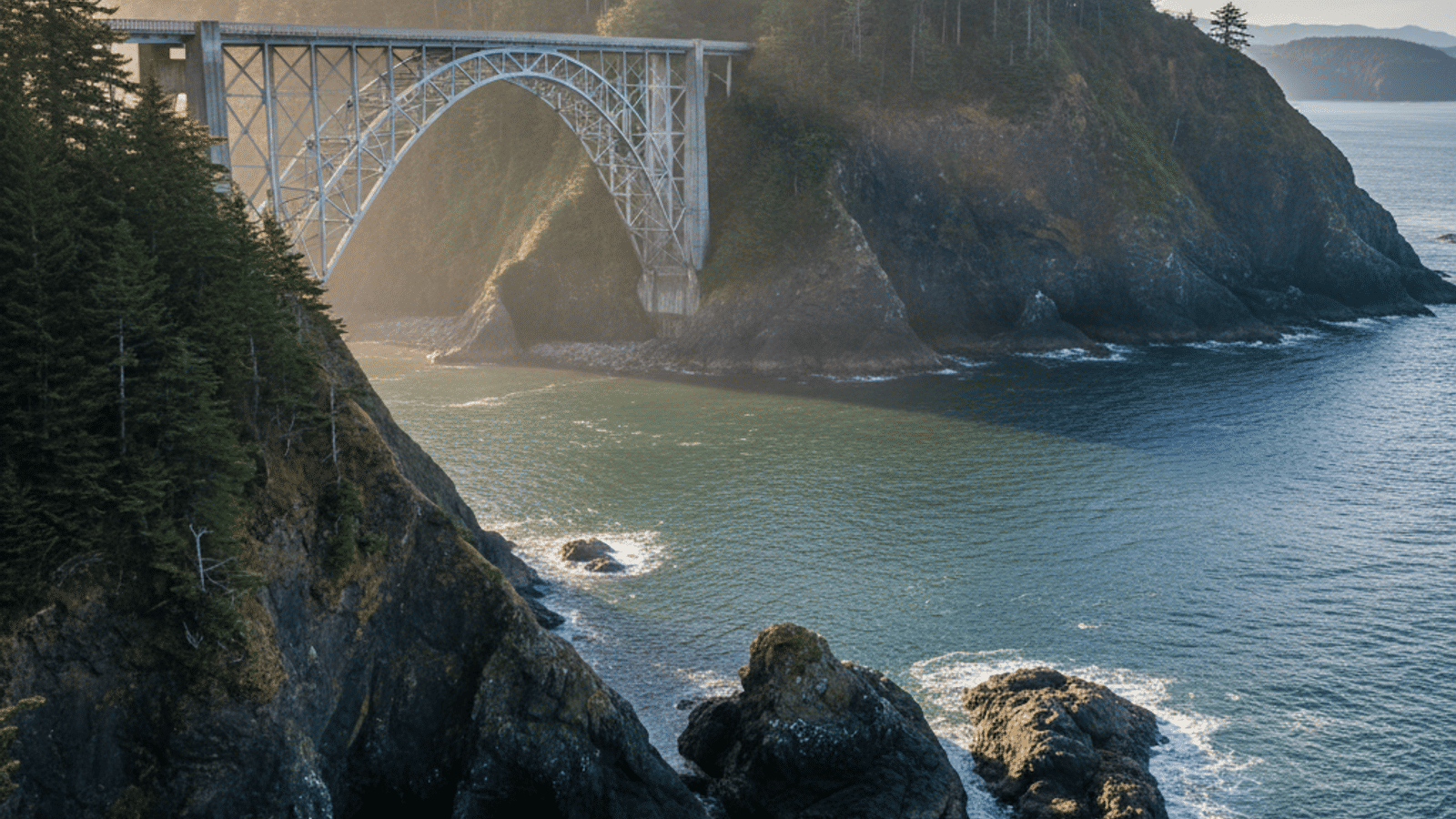
Deception Pass Bridge (North End) If you live in Oak Harbor or Coupeville, you have a land bridge connection to the mainland via Fidalgo Island and Anacortes. It is open 24/7 and free. The downside is that it’s a two-lane scenic bridge that can bottleneck severely during the summer tourist season or if there is an accident.
Clinton-Mukilteo Ferry (South End) This is the lifeline for the south. The ferry runs roughly every 30 minutes and the crossing takes about 20 minutes. It connects you to Mukilteo, where you can catch the Sounder Train into Seattle. It is a reliable system, but summer weekends and holidays can create multi-hour wait times. Residents live and die by the ferry schedule and ferry cam apps.
Island Transit One of the best perks of living here is Island Transit, a fare-free bus service that runs the length of the island. It’s a fantastic way to save gas if you are commuting between Oak Harbor and the ferry.
The Reality of the Commute Commuting to Seattle is doable from the South End, but it is a grind. Between the drive to the ferry, the crossing, and the train or drive into the city, you are looking at 1.5 to 2 hours each way.
Lifestyle: Weather, Nature, and the "Rain Shadow"
You might expect constant rain, but Whidbey has a secret: the Olympic Rain Shadow.
Because the Olympic Mountains block much of the incoming weather systems from the Pacific, Central and North Whidbey get significantly less rain than Seattle. We are talking about 20 to 25 inches of rain per year compared to Seattle’s 37 inches. This makes the island surprisingly sunny and dry, earning it the nickname "the Sunbelt of the Puget Sound."
This climate allows for an incredible outdoor lifestyle. Deception Pass State Park is the most visited state park in Washington for a reason—it’s stunning. Residents spend their weekends hiking at Ebey’s Landing, exploring the bunkers at Fort Casey, or crabbing and fishing along the coast.
For those with a green thumb, the island is in Zone 8b with a long growing season. It is a haven for gardening, homesteading, and small-scale farming. Just be aware that when summer hits, the tourists arrive. July and August bring heavy traffic and booked restaurants. Locals usually learn to "hunker down" during peak weekends or time their errands for early mornings.
Employment, Schools, and Healthcare
If you aren't retired or working remotely, you need to know where the jobs are.
Employment Anchors The Naval Air Station (NAS) Whidbey Island is the economic powerhouse of the north, employing thousands of military and civilian personnel. Outside of defense, the biggest sectors are healthcare (WhidbeyHealth), tourism, and local government.
Schools There are three main school districts, reflecting the island's three zones. Oak Harbor School District is the largest and is very accustomed to supporting military children who move frequently. Coupeville is smaller and more rural. South Whidbey School District (Langley/Clinton) has a reputation for being smaller with a strong integration of arts and alternative learning styles.
Healthcare WhidbeyHealth Medical Center is located in Coupeville, providing emergency services and general care. However, for major surgeries or specialized treatments, many residents travel off-island to Anacortes, Everett, or Seattle. It’s something to consider if you have complex ongoing health needs.
Pros and Cons of Living on Whidbey Island
Living on a rock in the Sound isn't for everyone. Here is the honest breakdown of the trade-offs.
Pro: "Island Time" The pace of life here is genuinely slower. People stop to talk in grocery aisles. Stress levels tend to be lower than on the mainland.
Pro: Strong Community Because it’s an island, neighbors rely on each other. Whether it’s clearing a downed tree or returning a lost dog, the sense of community is tangible.
Con: The Jet Noise This is the "Sound of Freedom." In North and Central Whidbey, NAS Whidbey runs practice flights for Growler jets. It can be incredibly loud—earth-shakingly loud. Before buying, check the noise zone maps. It is a dealbreaker for some, while others barely notice it.
Con: Limited Services If you need something specific, you might not find it here. Big shopping trips happen in Oak Harbor or off-island. Also, "Next Day" delivery often turns into 2-3 day delivery.
Con: Darkness Outside of the downtown strips, there are very few streetlights. The winters are long, dark, and extremely quiet. You have to be okay with the solitude.
Frequently Asked Questions
Is Whidbey Island a good place to retire?
Yes, Whidbey is a very popular retirement destination, particularly in South Whidbey (Langley, Freeland, and Clinton). Retirees appreciate the slower pace, the mild "rain shadow" weather, and the active senior centers and arts communities. However, retirees should weigh the cost of housing in the south and proximity to specialized healthcare on the mainland.
Does it snow on Whidbey Island?
Snow is relatively rare here compared to the mountains, usually only dusting the island once or twice a winter. However, when it does snow, the hilly terrain and limited number of snowplows can make driving treacherous. Many residents simply stay home until it melts, which usually happens within a day or two.
How loud is the jet noise on Whidbey Island?
It depends entirely on where you are located relative to the flight paths of Ault Field and the Outlying Landing Field (OLF) in Coupeville. In the "crash zones" or high-noise zones, the jets are loud enough to pause conversations and shake windows. It is vital to spend time at a property during flight operations before purchasing to see if it bothers you.
How much does the ferry cost for residents?
There is no specific "resident discount" for the ferry, but you can save money by purchasing multi-ride punch cards (Wave2Go passes). Fares are charged for the vehicle and driver, plus a smaller fee for each additional passenger. Walk-on passengers pay a much lower rate, which is why many commuters park in Mukilteo and walk on.