Real Estate Comparison: Coupeville, WA vs Oak Harbor in 2026
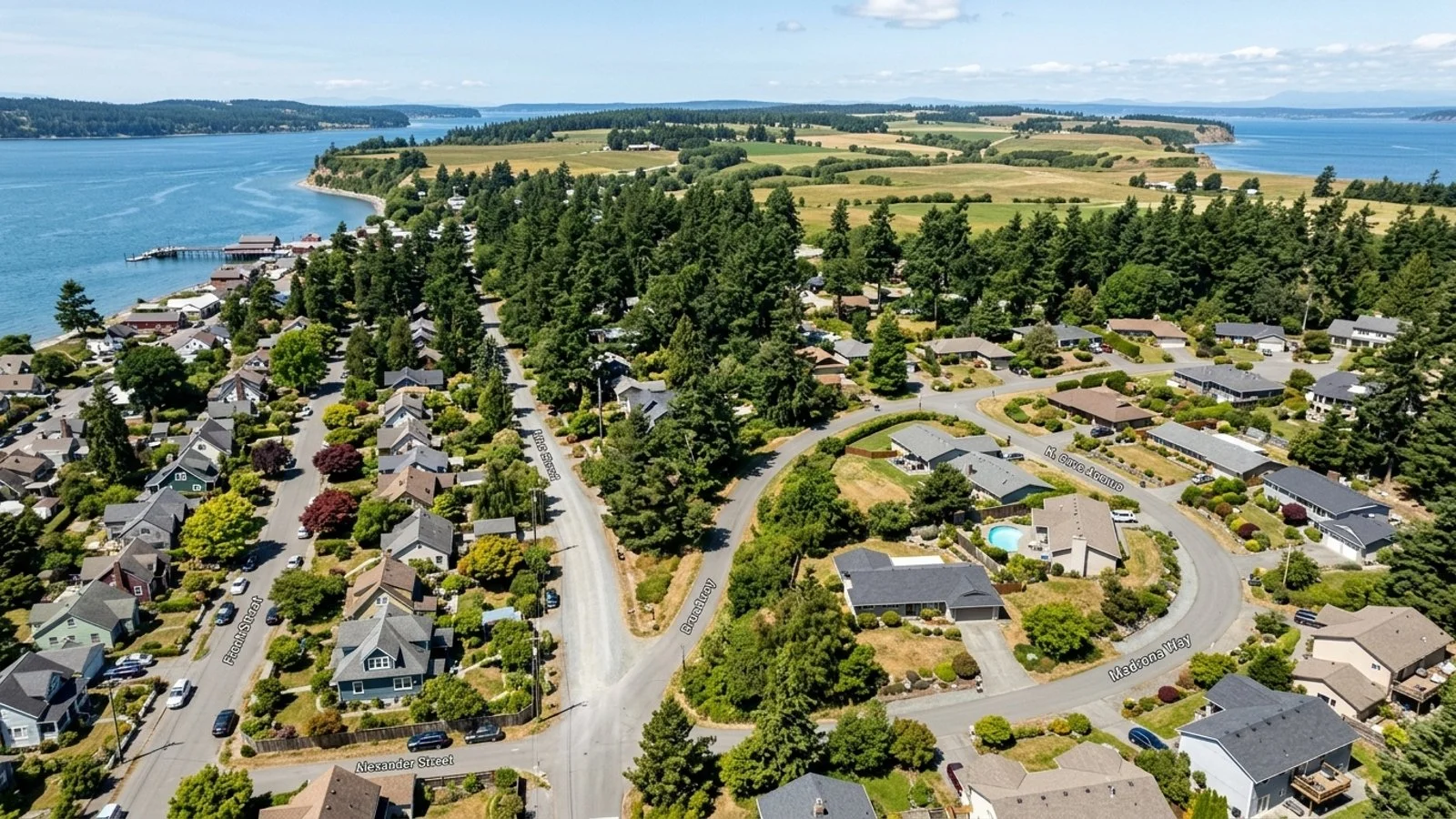
Island County breaks into four main geographic areas, and Oak Harbor and Coupeville are the two primary incorporated towns on Whidbey Island. Buyers comparing living in Coupeville, WA to Oak Harbor are really weighing Central Whidbey's agricultural character against North Whidbey's military-driven economy - two distinct ways of living on the same island.
Both towns sit along State Route 20, but they offer different housing stocks and different daily rhythms. What it actually comes down to is property taxes, commute times to Naval Air Station (NAS) Whidbey Island, and what kind of home you're looking for.
Regional Geography of Central and North Whidbey
Central Whidbey, where Coupeville is located, falls inside the Olympic rain shadow and gets roughly 20 to 22 inches of rain a year. That lower rainfall is what historically made the area's prairie agriculture viable - land that's now protected by Ebey's Landing National Historical Reserve.
Oak Harbor occupies North Whidbey and functions as the area's northern naval hub. Coupeville acts as a geographic bridge between the base up north and the forested communities further south, but Oak Harbor is the one closer to the Deception Pass Bridge and the quickest route off-island.
Housing Market and Property Types
The housing inventory in these two towns reflects their separate histories. You're not shopping from the same menu in both places - the ratios of single-family homes, townhouses, and multi-family units are genuinely different.
Oak Harbor supports a larger population and carries a broader mix of housing densities, much of it shaped by the needs of personnel stationed at NAS Whidbey Island. Coupeville is smaller, with residential development concentrated on detached homes and historic properties.
Home Prices and Market Pace
Recent 2026 MLS data puts Coupeville's median sale price around $471,000, with homes averaging roughly 17 days on the market. That pace is fast enough that you'll want financing lined up before you start touring - there isn't much time to get organized after the fact.
Oak Harbor's median runs from roughly $497,000 to $547,000 depending on neighborhood and property size. Both markets currently sit at about 3.5 months of supply, which gives you some negotiating room without being a full buyer's market.
Available Property Styles
In Coupeville, detached single-family homes make up about 68.7% of housing units. The architecture ranges from historic 1920s cottages and mid-century ranch homes to newer builds oriented toward water views, with mobile homes and duplexes accounting for a much smaller slice.
Oak Harbor is more varied. Single-family detached homes account for roughly 51% to 52% of the market there. The rest breaks down into large apartment complexes at about 20%, duplexes around 16%, and a mix of condos and row houses.
Local Taxes and Cost of Living
Island County's median effective property tax rate runs approximately 0.72% of assessed value - that's the county-wide baseline for unincorporated areas around both towns.
Inside city limits, it's a different story. Municipal services and local levies shift the numbers, and public records put Oak Harbor's average property tax rate at around 0.87% of assessed value. That gap matters when you're running monthly cost scenarios. A home purchased for $500,000 in Oak Harbor will carry a different annual tax bill than a similarly priced property in Coupeville - worth building into your calculations before you make an offer.
Daily Life, Parks, and Retail
Central and North Whidbey both offer substantial public lands, but the day-to-day experience looks different depending on which town you're in. Coupeville sits right on Penn Cove, known for its mussel farming and water activities. That access is immediate - it's not a drive to get there.
Oak Harbor puts you closer to Deception Pass State Park, one of Washington's most visited state parks, with its rugged coastlines, dense forests, and the Deception Pass Bridge connecting Whidbey to Fidalgo Island.
Outdoor Recreation and Trails
Coupeville's waterfront connects directly to Ebey's Landing National Historical Reserve, which protects nearly 17,000 acres of rural farmland and coastal bluffs. Fort Ebey State Park is nearby, with nearly 25 miles of interconnected trails through old-growth forest.
Oak Harbor residents tend to use the city parks and the shoreline areas along the northern end of the island. Both towns give you easy access to hiking, fishing, and boating - though Coupeville's trails sit closer to the town center than Oak Harbor's do.
Shopping and Dining Options
Coupeville's commercial core is Front Street and Main Street. It's compact - local restaurants, shops, and galleries within walking distance of the historic wharf. That's essentially the full picture.
Oak Harbor is the primary commercial hub for North Whidbey, with larger grocery stores, national retail chains, and a wider range of daily services. If proximity to big-box retail matters to your daily routine, that search tends to point north.
Commuting and Regional Transit
State Route 20 is the main road connecting both towns to the rest of the island, whether you're heading north to the Deception Pass Bridge or south toward the state ferry terminals.
Island Transit runs fare-free bus service throughout the county, including routes between the two towns. That said, coverage is limited - about 80% of residents commute by personal vehicle, and roughly 1% rely on public transit. Plan accordingly.
Naval Air Station Whidbey Island is the region's largest employer and drives a significant share of local traffic patterns. Ault Field is located near Oak Harbor; the Outlying Field sits closer to Coupeville. That split is actually why both towns work as practical bases for military personnel and civilian employees - you're not locked into one option.
Frequently Asked Questions
Is real estate generally more expensive in Coupeville, WA compared to Oak Harbor?
Based on recent 2026 MLS data, Coupeville's median sale price is around $471,000, while Oak Harbor's median ranges from roughly $497,000 to $547,000. Coupeville runs slightly less expensive on average, though prices shift based on property type and waterfront access.
What is the main difference in lifestyle and daily amenities between Coupeville and Oak Harbor?
Coupeville offers a smaller, historic downtown centered around Front Street and Ebey's Landing National Historical Reserve. Oak Harbor functions as a larger commercial center with more big-box retail and a higher concentration of military-related infrastructure.
How does the NAS Whidbey jet noise impact neighborhoods in Coupeville versus Oak Harbor?
Both towns deal with aircraft noise given their proximity to NAS Whidbey Island facilities, which house EA-18G Growler squadrons. Oak Harbor is adjacent to main operations at Ault Field, while Coupeville sits near the Outlying Field used for specific training exercises.
Which town offers a better daily commute to the Clinton ferry or Deception Pass bridge?
Oak Harbor is on North Whidbey, which makes it a shorter drive to the Deception Pass Bridge and off-island access via State Route 20. Coupeville is further south in Central Whidbey, placing it closer to the southern ferry terminals.
Is Coupeville or Oak Harbor a better fit for military families looking to buy a home?
Both towns are practical options for personnel stationed at NAS Whidbey Island. Oak Harbor offers a shorter commute to Ault Field and more multi-family housing, while Coupeville gives you detached single-family homes near the Outlying Field.
Are there stricter zoning or historic preservation rules when buying property in Coupeville, WA?
Properties within Ebey's Landing National Historical Reserve fall inside a protected 17,000-acre area. If you're looking at historic 1920s cottages or farmland in that zone, review the Reserve's land-use guidelines before you get too far into the process.