Getting Around Whidbey Island: A Local’s Guide to Ferries, Bridges, and Buses
If you are thinking about moving to Whidbey Island or have just unpacked your boxes, you probably already know that life on "The Rock" runs a little differently. We aren't just a suburb of Seattle; we are a 55-mile-long stretch of rural beauty that requires a bit of strategy to navigate.
Because the island is so long and narrow, getting from the south tip in Clinton to the north end at Deception Pass takes over an hour—and that’s without traffic. Living here means adopting "Island Time." It’s not just a catchy phrase for tourists; it’s a mindset you need when you're timing a ferry run or waiting for a bridge opening.
There are really only three ways to handle transportation here: taking the boat from the south, driving the bridge from the north, or hopping on our incredible transit system. Let’s break down how to get around without losing your mind.
The Main Artery: Mukilteo-Clinton Ferry
For most people living in Clinton, Langley, or Freeland, the Mukilteo-Clinton ferry is your lifeline. It connects the south end of the island to the mainland in Everett, and it’s one of the busiest ferry routes in the state. The crossing itself is quick—usually about 20 minutes—but the logistics around it are a daily topic of conversation at local coffee shops.
Boats run frequently, usually every 30 minutes starting as early as 4:40 AM and going until just after 1:00 AM. If you are commuting, you get into a rhythm. But if you are planning a trip to Costco or a specialist in Bellevue, you need to watch the clock.
The Cost of Crossing
As of early 2026, the fares have ticked up slightly. You are looking at approximately $12.05 for a standard vehicle and driver one way.
Here is the quirk that newcomers often miss: You pay for the car both ways, but walk-on passengers usually only pay leaving Mukilteo. If you walk onto the ferry from the Clinton side to grab lunch in Mukilteo, the boat ride over is free for passengers. You only pay the passenger fare (roughly $6.95) when coming back Westbound.
Dealing with the "Ferry Line"
The ferry line is a fact of life. On a rainy Tuesday morning, you might breeze right onto the boat. But on a sunny Friday afternoon? Expect to wait. The line of cars waiting to get onto the island can back up significantly in Mukilteo.
The same goes for leaving the island on a Sunday afternoon. Summer weekends are the trickiest; you might find yourself waiting one or two hours if you time it wrong.
Pro Tip: If you don't need your car on the other side, don't take it. Walking on makes you immune to traffic. You stroll past the gridlock, board the boat, and enjoy the view. It is by far the smartest way to connect to mainland transit.
The Scenic North Route: Deception Pass Bridge
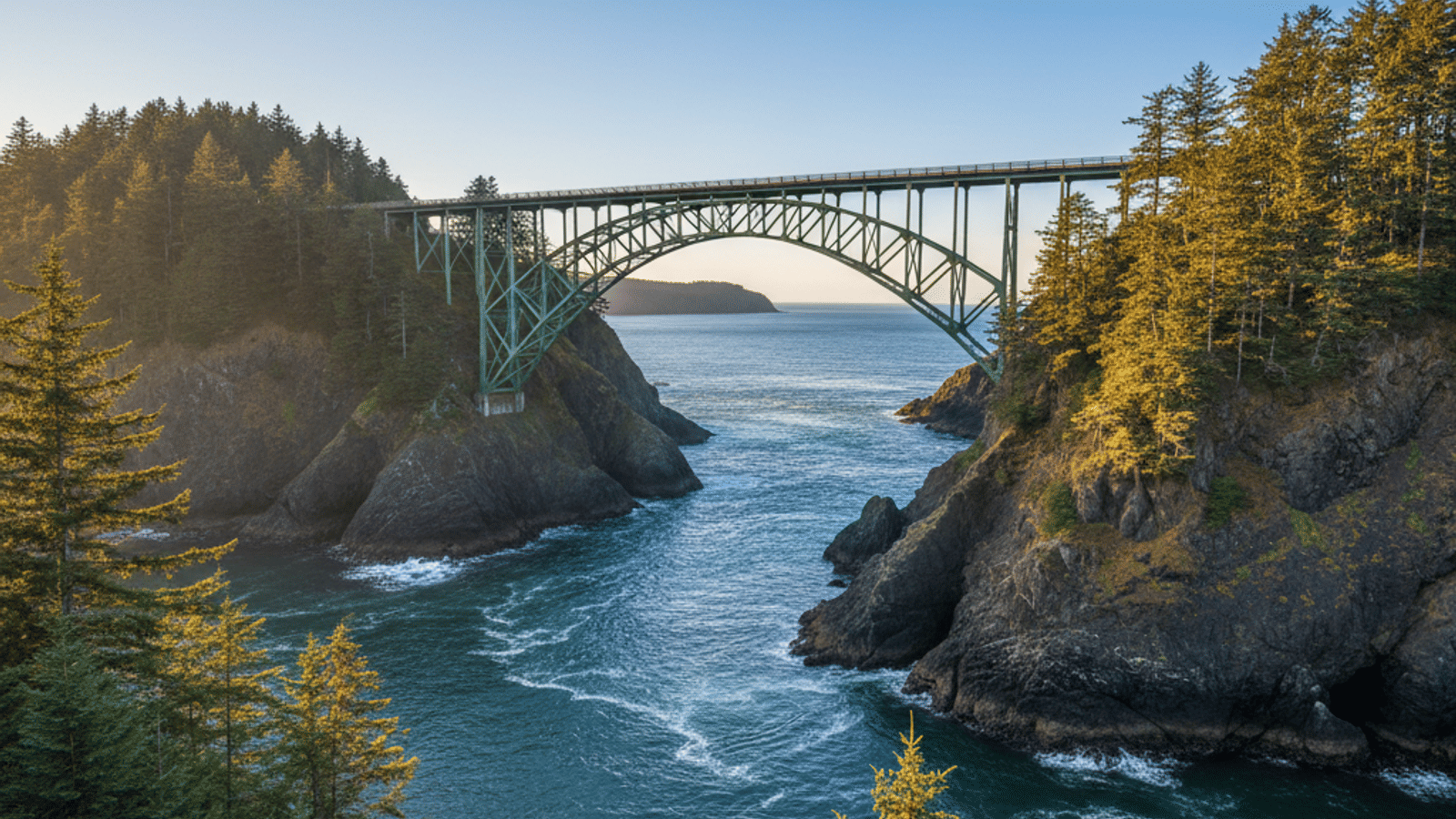
If ferries stress you out, or if you are looking at living in Oak Harbor, Deception Pass Bridge is your best friend. This iconic bridge connects the north end of Whidbey to Fidalgo Island, leading you straight toward Anacortes, Burlington, and Mount Vernon.
The biggest pro here is obvious: it’s free. There are no tolls, no schedules, and it is open 24/7. Plus, the view from 180 feet above the swirling water is world-class every single time you drive it.
However, it is a two-lane historic bridge built in 1935. That means one lane each way. If there is an accident or maintenance work, traffic stops completely. In the peak of summer, tourists flock to the bridge for photos, which can slow the crossing to a crawl. If you commute off-island via the bridge, it is generally reliable, but when it shuts down, you are effectively cut off until they clear the road.
The Olympic Connection: Coupeville-Port Townsend Ferry
Mid-island residents have a second ferry option, but this one is very different from the Clinton run. The Coupeville to Port Townsend route connects Whidbey to the Olympic Peninsula. It is fantastic for day trips to Victoria, BC or hiking in the Olympic National Park.
Reservations are essential here. The ferry terminal in Keystone is small and subject to strong currents, so the boats are smaller and cancellations happen more often during rough tides.
Unlike the Clinton ferry where you can just show up and wait, you really need to book your spot on this run. They release space in tiers (2 months out, 2 weeks out, and 2 days out), so if you are planning a weekend getaway, set a reminder on your phone.
Getting Around for Free: Island Transit
This is one of the best-kept secrets about the cost of living on Whidbey Island. Our bus system, Island Transit, is fare-free. You can ride from the ferry dock in Clinton all the way to Oak Harbor without opening your wallet.
The system is robust for a rural area. Route 1 is the spine of the system, running up and down the length of the island pretty much every hour. Route 6 covers Oak Harbor, and Route 411W gets you across the bridge to Mount Vernon.
Sunday Service and 2026 Updates
A few years ago, the buses didn't run on Sundays, which was a hassle. That has changed. In 2026, you can catch a ride on Sundays from roughly 6:45 AM to 7:00 PM.
There are also some changes coming up this spring. Starting March 29, 2026, the "On-Demand" zones near NAS Whidbey are converting to fixed routes. If you rely on the on-demand service to get to the base, make sure you check the new maps before the end of March so you aren't left waiting at a stop that doesn't exist anymore.
Commuting Off-Island: Seattle, Everett, and Beyond
If you are working at Boeing, Microsoft, or downtown Seattle, you have a few strategies to keep your sanity.
The Sounder Train This is the gold standard for Seattle commuters. You drive to the Clinton ferry, park your car (or get dropped off), walk onto the boat, and then walk a few hundred feet to the Mukilteo Sounder Station. The train drops you right in downtown Seattle. It’s stress-free, reliable, and lets you read or nap instead of fighting I-5 traffic.
Vanpools You will see vanpools cutting the line at the ferry dock. That isn't cheating; it's a perk. Registered vanpools get priority loading. If you work a standard shift at a major employer like Boeing, joining a vanpool can save you hours of waiting in ferry lines over the course of a year.
Whidbey SeaTac Shuttle Heading to the airport? Do not drive and park if you can avoid it. The Whidbey SeaTac Shuttle is a door-to-door (or station-to-station) bus service that runs daily. It is pricey—around $57 for a one-way adult ticket from Oak Harbor or Clinton—but it saves you gas, ferry fares, and expensive airport parking.
Driving Times & Traffic Bottlenecks
Even if you never leave the island, getting from town to town takes time. We have one main highway that changes names from SR 525 (South) to SR 20 (North).
If you are driving from Oak Harbor to the Clinton ferry, budget 50 to 60 minutes. It’s a beautiful drive through forests and past water views, but it’s not fast. A shorter hop, like Coupeville to Freeland, usually takes about 20–25 minutes.
The "Whidbey Jam"
Traffic is generally light, but there are bottlenecks. The area around NAS Whidbey Island—specifically near Ault Field Road and Heller Road—can get jammed up during shift changes when the base lets out.
Also, keep your eyes peeled for deer. It sounds cliché, but deer strikes are the most common "traffic accident" we see. They are everywhere, especially at dusk on the highway stretches between Greenbank and Freeland.
Is Car-Free Living Realistic?
I often get asked by people preparing their moving to Whidbey Island checklist if they can survive without a car.
The Verdict: It depends on your zip code. If you live in downtown Oak Harbor or right in the village of Langley, you can get by. You can walk to groceries, coffee, and catch the free bus.
However, for most of the island, a car is necessary. Places like Greenbank or the rural outskirts of Clinton are effectively food deserts if you don't have wheels.
Biking is popular here, and with the rise of e-bikes, those rolling hills are much easier to handle. But be warned: many island roads have narrow shoulders. The "Bridge to Boat" trail is a great long-term vision, but right now, you are sharing the road with pickup trucks and logging lorries.
Frequently Asked Questions
How much does the Whidbey Island ferry cost in 2026?
As of early 2026, a standard vehicle (under 22 feet) with a driver costs approximately $12.05 one way. Walk-on passengers pay about $6.95, but generally only on the westbound trip from Mukilteo to Clinton.
Does Island Transit run on Sundays?
Yes, it does. As of Winter 2026, Sunday service is active, running generally from 6:45 AM to 7:00 PM. It is a huge help for weekend errands or getting to the ferry.
Do I need a reservation for the Whidbey Island ferry?
It depends on the route. For the main Mukilteo-Clinton route, no reservations are taken; it is first-come, first-served. For the Coupeville-Port Townsend route, reservations are absolutely essential and should be booked weeks in advance.
Is there a bridge to Whidbey Island?
Yes, the Deception Pass Bridge connects the north end of Whidbey Island to Fidalgo Island and the mainland. It is free to drive across and stays open 24 hours a day.