Coupeville vs. Langley: Choosing Your Whidbey Island Home
If you are looking into living on Whidbey Island, you’ve likely realized that "Whidbey" isn't just one place—it’s a collection of very different communities stretching over 50 miles. The two biggest cultural hubs, Coupeville and Langley, couldn't be more distinct.
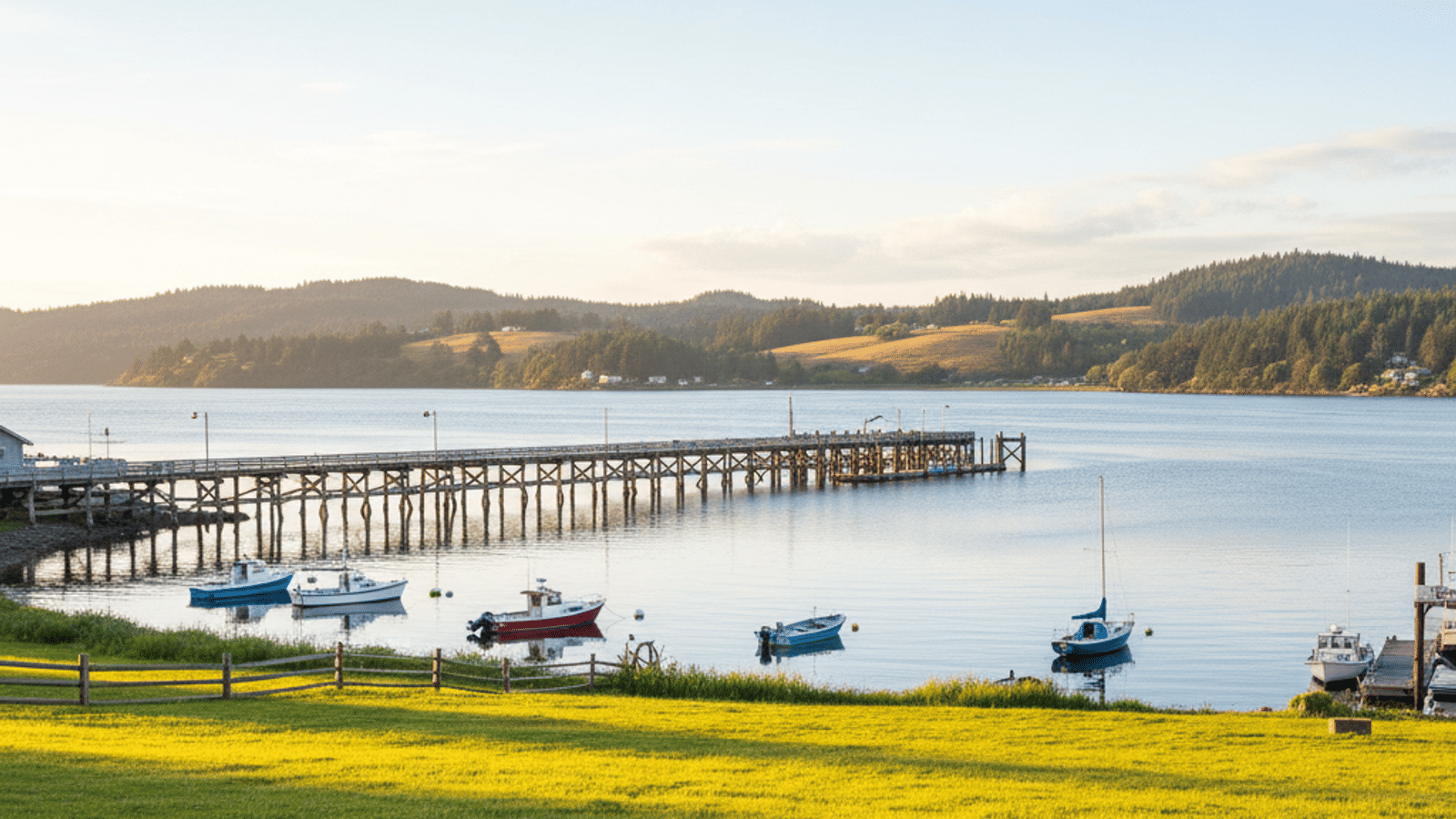
Deciding between them often feels like choosing between two different lifestyles. Coupeville, located in Central Whidbey, is the historic county seat. It’s famous for its iconic wharf, its role in the movie Practical Magic, and a quieter, rural pace that feels deeply connected to the island’s agricultural roots. It sits about 25 miles north of the Clinton ferry terminal.
On the other end of the spectrum—and the island—is Langley. Sitting just 10 miles from the ferry in South Whidbey, Langley is known as the "Village by the Sea." It’s the artsy heart of the island, packed with galleries, theater, and a bit more hustle and bustle thanks to its proximity to Seattle.
The choice usually comes down to a few key trade-offs. Generally speaking, buyers lean toward Coupeville for history, medical access, and drier weather, while others choose Langley for the arts scene, fine dining, and an easier commute to the mainland.
Vibe & Community: Historic Charm vs. Artsy Village
When you walk around these towns, the energy is noticeably different. Coupeville feels steeped in history. As the second-oldest town in Washington State, it has a maritime heritage that is still very much alive. The town lies within Ebey’s Landing National Historical Reserve, meaning the landscape is protected, and the vibe is grounded and community-focused. It tends to move at a slower pace, which residents love.
Langley, by contrast, has a bit of cosmopolitan flair. It’s often described as having a "European village" feel. You’ll find a high concentration of artists, writers, and musicians here. Because it’s the first major stop for tourists coming off the Clinton ferry, the downtown core is busier, especially on weekends.
Both towns are popular with retirees—the median age in Coupeville hovers around 62 or 63—but there is a distinction in who else lives there. Coupeville sees more Navy personnel because it is a short drive to the base in Oak Harbor. Langley tends to attract more commuters and remote workers with ties to Seattle.
Seasonal rhythms matter here, too. Langley can feel quite crowded during summer festivals. Coupeville certainly gets tourism—everyone wants those Penn Cove mussels—but it tends to retain a "local" quietness in the evenings that you might not find in the heart of Langley during peak season.
The Weather Factor: The Rain Shadow Advantage
If you ask a local about the biggest difference between the two towns, they might just point at the sky. Whidbey Island has a fascinating microclimate known as the Olympic Rain Shadow, and where you land on the map dictates how often you need your umbrella.
Coupeville sits squarely in the center of the Rain Shadow. This means it receives significantly less rainfall than the southern tip of the island. We are talking about an annual rainfall of roughly 18 to 20 inches. Residents here enjoy more sun breaks in the winter and a longer growing season for their gardens.
Langley is located further south, closer to the convergence zone. While it is still drier than Seattle, it sits on the edge of the shadow. Annual rainfall here is closer to 30 to 35 inches. The result is that Langley is lush, green, and forested, but it definitely sees more grey days and wet weather than Central Whidbey.
Cost of Living & Real Estate Market (2026 Update)
As we settle into the 2026 market, we are seeing the pricing gap between these two areas stabilize, though a distinction remains.
Langley (The Premium Choice): Real estate in Langley generally commands a higher price point. This is driven by the "village" demand and the fact that it is an easier commute to Seattle. The inventory here often includes high-end view homes, bluff-top estates, and charming cottages. You can expect median home prices to hover in the $780,000 range, though this fluctuates based on the limited inventory available.
Coupeville (Value & Mid-Range): You can often get more for your money in Central Whidbey. Buyers looking for acreage or hobby farms often find Coupeville provides better value. Prices have softened slightly or stabilized entering 2026 compared to the post-pandemic peak. The median home price here sits more in the $500,000 to $600,000 range, though there is high variance depending on whether you are looking at a condo near the wharf or a home with acreage.
A Note on Rentals: If you aren't ready to buy, be aware that long-term rentals are scarce in both towns. However, they are slightly easier to find in the Coupeville vicinity due to the military presence. Langley has a very high volume of homes dedicated to short-term vacation rentals, which squeezes the long-term housing supply.
Location & Commuting: Seattle vs. Oak Harbor
Your commute—or lack thereof—should be a major factor in your decision.
If you are a hybrid worker needing to get to Seattle or Everett a few times a week, Langley is the clear winner. The drive to the Clinton Ferry is a manageable 10 to 15 minutes. From there, it’s a 20-minute crossing to Mukilteo. You can be in North Seattle relatively quickly.
Commuting to the mainland from Coupeville is a different story. The drive to the Clinton ferry takes about 35 to 45 minutes on a good day. Adding that extra hour round-trip makes daily commuting to Seattle exhausting for most people. However, if you work at NAS Whidbey or in Oak Harbor, Coupeville is perfect—you’re just a short drive away from work without the city noise.
Coupeville does have a unique travel perk: the Keystone Ferry. This connects you to Port Townsend on the Olympic Peninsula, which is fantastic for weekend trips to the mountains, though you almost always need a reservation.
Amenities: Healthcare, Shopping, and Dining
Once you are settled, you need to know where to buy groceries and where to go if you get sick.
Healthcare: Coupeville wins big in this category. It is home to WhidbeyHealth Medical Center, the island’s hospital and ER. For retirees or those managing chronic conditions, living minutes away from the hospital rather than 30 minutes away (from Langley) offers significant peace of mind.
Shopping: Coupeville has the Red Apple Market for groceries and is a short 10-minute drive to Oak Harbor, which has all the big-box stores like Walmart, Home Depot, and Safeway. Langley relies on the Star Store—a wonderful gourmet grocer—and various boutique shops. If you need standard household items or big chains, living in Langley usually requires a drive up north or a trip to the mainland.
Dining: Langley takes the prize for variety. It has a higher density of fine dining, bistros, bakeries, and coffee shops per capita. It’s a foodie’s delight. Coupeville offers excellent options—especially for fresh seafood at the water’s edge—but the choices are fewer and generally more casual.
Schools and Education
For households with students, the school district boundaries are a key consideration.
Coupeville School District: The schools here generally receive high marks from parents (Niche grade B+). Because the community is smaller, class sizes tend to be manageable, and there is a strong sense of community support for the Wolves (the local mascot). It offers a traditional, tight-knit school experience.
South Whidbey School District (Langley): The South Whidbey district has a good reputation (Niche grade B-) and is known for a strong focus on the arts and alternative learning styles, reflecting the community’s values. However, the district has faced enrollment challenges in recent years as the cost of housing in the south end has risen.
Outdoor Recreation: Beaches, Trails, and Parks
Both towns offer incredible access to nature, but the terrain differs.
Coupeville is characterized by open prairies and big skies. Ebey’s Landing is arguably the best hike on the island, offering bluff trails with sweeping views of the sound and the Olympics. You also have Fort Casey State Park and easy water access at Penn Cove for kayaking.
Langley feels more nestled in the woods. The terrain is hillier and greener. You have access to South Whidbey State Park for forest bathing, the extensive trail systems at Putney Woods, and beach walking at Seawall Park. If you prefer deep forests over open fields, Langley is your spot.
Verdict: Which Town Fits Your Lifestyle?
Choosing between these two Whidbey Island gems really comes down to what you prioritize in your daily life.
Choose Coupeville if:
You want the driest weather possible (the Rain Shadow benefit).
Proximity to a hospital and ER is a priority.
You prefer a quiet, historic maritime vibe over a busy tourist center.
You want more land or value for your budget.
Choose Langley if:
You need to commute to Seattle or the mainland regularly.
You love a walkable village atmosphere with art galleries and theater.
You prefer a lush, wooded environment and don't mind a bit more rain.
You are looking for a luxury view home or cottage.
FAQ
Is Coupeville or Langley better for commuting to Seattle?
Langley is significantly better for commuting to Seattle. It is only a 10–15 minute drive to the Clinton ferry terminal, whereas driving from Coupeville adds an extra 30–40 minutes of travel time each way.
Does it rain more in Langley than Coupeville?
Yes, Langley gets more rain. Coupeville is located deep in the Olympic Rain Shadow and receives about 18–20 inches of rain annually, while Langley sits on the edge of the shadow and gets roughly 30–35 inches.
Which town has better healthcare access?
Coupeville has better immediate access to healthcare because it is home to WhidbeyHealth Medical Center, the island's primary hospital and emergency room. Residents in Langley generally have to drive north to Coupeville or take the ferry to the mainland for major medical services.
Are home prices higher in Coupeville or Langley?
Real estate in Langley generally commands a higher price, with median homes often in the $780,000 range due to high demand and ferry proximity. Coupeville is typically more affordable, with median prices often sitting between $500,000 and $600,000.