Is Whidbey Island, WA Safe? A Local’s Guide to Crime & Risks
If you’ve been searching online for "Whidbey Island Safe," you might have accidentally pulled up directions to the Safeway grocery store in Oak Harbor a few times. It happens to the best of us. But assuming you are here because you’re thinking about moving to Whidbey Island or planning a trip, you want to know about the other kind of safety.
Is it safe to live here? Is it safe to walk alone at night? What about the earthquakes?
As a local, I can tell you that Whidbey Island offers a significantly slower pace of life than the mainland, and that usually translates to a much quieter safety profile. However, living on an island in the Pacific Northwest comes with two distinct types of safety considerations: personal safety (crime) and environmental safety (nature).
The short answer is yes: Whidbey Island is statistically very safe, especially when you compare it to the I-5 corridor hubs like Seattle or Tacoma. In fact, Oak Harbor is consistently ranked as one of the safest cities in Washington. But let’s dig into the real numbers and the local quirks so you know exactly what to expect.
Whidbey Island Crime Rates: The Numbers
When we talk about crime here, we are usually looking at the stats for Island County and, specifically, the City of Oak Harbor. If you are moving from a major metro area, looking at these numbers might be a breath of fresh air.
Violent crime is extremely low. This is the statistic most people care about first. Across the island, violent crime rates are well below state and national averages. In recent years, Oak Harbor has reported a violent crime rate of roughly 0.7 incidents per 1,000 residents. To put that in perspective, that is a fraction of what you would see in larger Washington cities.
Property crime is the primary nuisance. Like almost anywhere in the Pacific Northwest, property crime is the most common issue. This usually looks like car prowls (breaking into cars), porch piracy, or petty theft. However, even these numbers tend to track below the national average.
The Island County Sheriff’s Office generally reports stable trends. Because the community is smaller and geographically contained (it is an island, after all), community policing tends to be effective. Neighbors know neighbors here, which is one of the best deterrents we have.
Safety by Region: Oak Harbor, Coupeville, & Langley
Whidbey is long and narrow, and the "vibe" changes drastically as you drive from the bridge in the north to the ferry in the south. Safety nuances shift a bit depending on your zip code.
North Whidbey (Oak Harbor)
This is the population hub. It has the highest density because of the Naval Air Station (NAS) and the main commercial strip. Interestingly, despite having the most people, Oak Harbor is often ranked as the safest municipality. For 2024/2025, it was ranked as the #6 safest city in Washington. You get the amenities of a city—shopping, schools, healthcare—without the gritty crime rates of a metropolis.
Central Whidbey (Coupeville)
As you move south to Coupeville, things get rural very quickly. The population density drops, and so does the crime rate. In Central Whidbey, your biggest safety concern on a Saturday night is likely a deer jumping out in front of your car on Highway 20. It is quiet, dark at night, and generally very peaceful.
South Whidbey (Langley/Clinton)
The south end has a "village" atmosphere. Langley is a tight-knit community where residents often joke about the "island way" of leaving doors unlocked (though, as a real estate professional, I will always tell you to lock your doors!). Crime here is very low. The Sheriff’s logs in the local paper are often filled with reports of loose dogs or noise complaints rather than serious criminal activity.
Natural Disasters: Tsunamis, Earthquakes, and Bluffs
If crime isn't the big worry, what is? In the Pacific Northwest, we have to respect the ground we walk on. If you are buying a home on Whidbey Island, you need to be aware of environmental risks.
Tsunami Zones and the Big One You will hear locals talk about the Cascadia Subduction Zone. While Whidbey Island is tucked into the Puget Sound and protected from the direct force of an ocean tsunami, we are not immune. There are specific low-lying areas—like the communities around Maxwelton, Cultus Bay, or the waterfront in Oak Harbor—that are in hazard zones.
Local Tip: Listen for the AHAB (All-Hazard Alert Broadcast) sirens. We test them on the first Monday of every month. If you hear that wail at noon on a Monday, it’s just a test.
Bluff Safety and Landslides This is a major consideration for waterfront property. Our island has stunning high-bank waterfronts, but those bluffs can be unstable. Landslides happen, especially after heavy winter rains. When visiting parks like Ebey’s Landing, stay back from the edge. The views are just as good five feet back.
Earthquakes We are in earthquake country. There is a specific fault line known as the South Whidbey Island Fault. Preparedness here is just standard PNW life: keep an emergency kit with water and food, and secure your heavy furniture.
NAS Whidbey Island: Safety & Quality of Life
You can’t talk about Whidbey without talking about the Navy. Naval Air Station (NAS) Whidbey Island is a massive presence in Oak Harbor, and it impacts safety in a few ways.
First, the base brings economic stability. Areas with stable employment often see lower crime rates, and the military presence contributes to a disciplined, watchful community. Many residents are active duty or veterans who take pride in keeping their neighborhoods secure.
The other side of the coin is the "Sound of Freedom." The EA-18G Growler jets fly regularly. While this isn't a "danger," it is a health and lifestyle safety factor regarding hearing protection and sleep quality. If you are looking at homes for sale in Oak Harbor or Coupeville, check the noise zone maps. Crash zones exist but accidents are extremely rare; the noise is the daily reality.
Safety Tips for Visitors and Tourists
If you are just visiting for the weekend to hike or see the sights, Whidbey is incredibly welcoming. However, don't leave your common sense on the ferry.
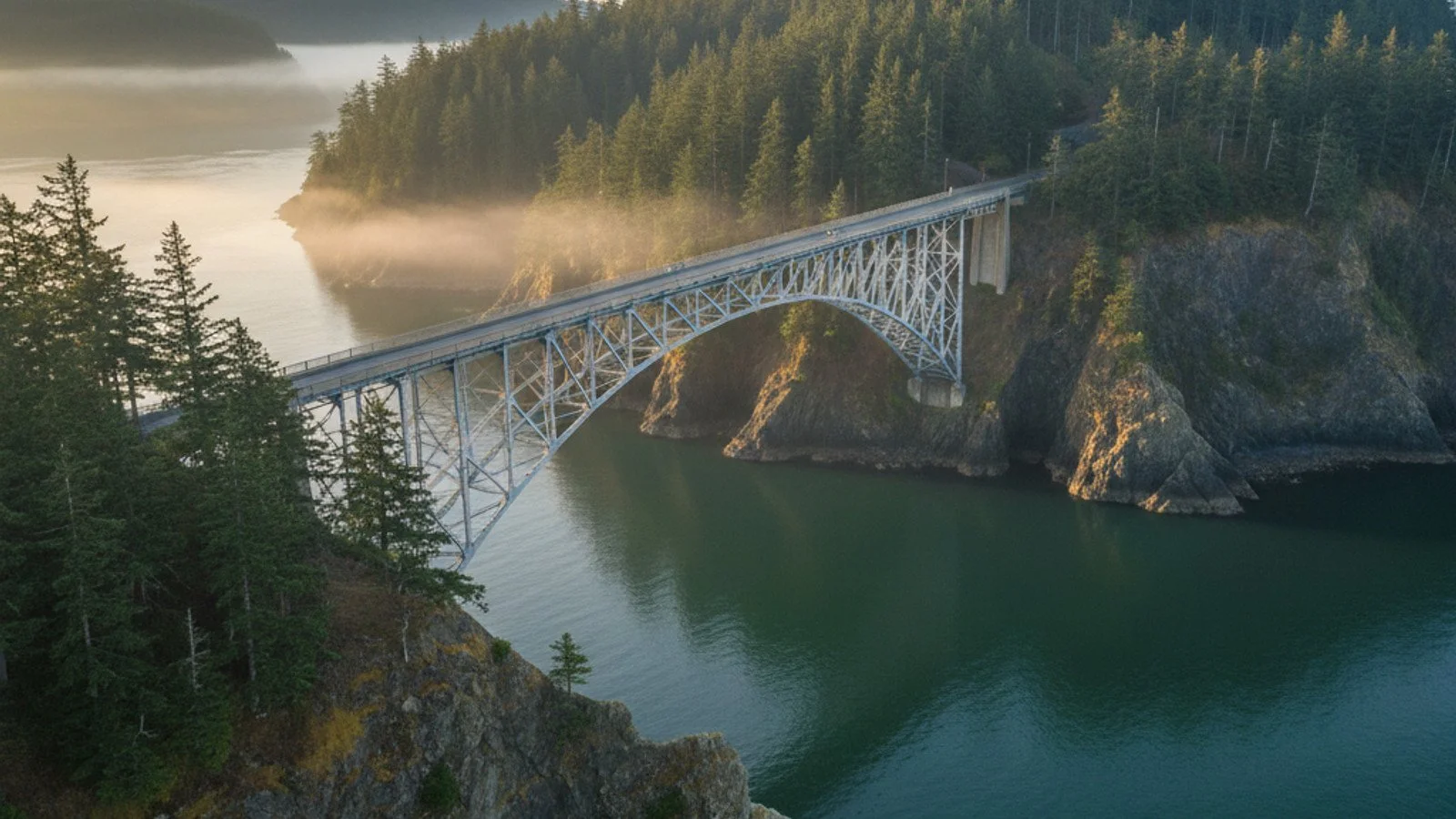
Deception Pass Bridge: This is our most iconic landmark, but it demands respect. The currents below the bridge are violent and fast. Enjoy the view from the rails, but never climb over barriers, and keep a close eye on pets and children on the bridge walkways.
Trailhead Security: This is a rule for the entire Pacific Northwest: leave nothing in your car. If you are hiking, take your valuables with you. Car prowlers know that hikers leave wallets in glove boxes.
Ferry Travel: The Washington State Ferries are very safe and heavily monitored by the State Patrol and Coast Guard.
Solo Travel: Whidbey is widely considered a safe destination for solo travelers. The locals are helpful, and cell service is generally reliable along the main highway (though it can be spotty on the beaches).
FAQ: Common Safety Questions
Is Whidbey Island safe for families?
Yes, Whidbey Island is a popular location for households of all sizes. The combination of low violent crime rates, access to parks, and community-focused events makes it a secure environment. Many neighborhoods in Oak Harbor are specifically designed with pedestrian-friendly streets near schools.
What is the crime rate in Oak Harbor, WA?
Oak Harbor consistently ranks as one of the safest cities in the state. Recent data places the violent crime rate at approximately 0.7 per 1,000 residents, which is significantly lower than the Washington state average. It was ranked the #6 safest city in WA in recent reports.
Are there bears or cougars on Whidbey Island?
Unlike the mainland Cascades, large predators are extremely rare on Whidbey Island. You generally do not need to worry about bears or cougars here. The most common wildlife encounters are deer (which are everywhere), coyotes, and bald eagles.
Will a tsunami hit Whidbey Island?
It is a possibility in the event of a major seismic event, but risk levels depend entirely on your elevation. High-bank areas are generally safe from water inundation. However, low-lying communities (like parts of Clinton or downtown Oak Harbor) are in tsunami hazard zones, which is why familiarizing yourself with the local evacuation maps is smart.