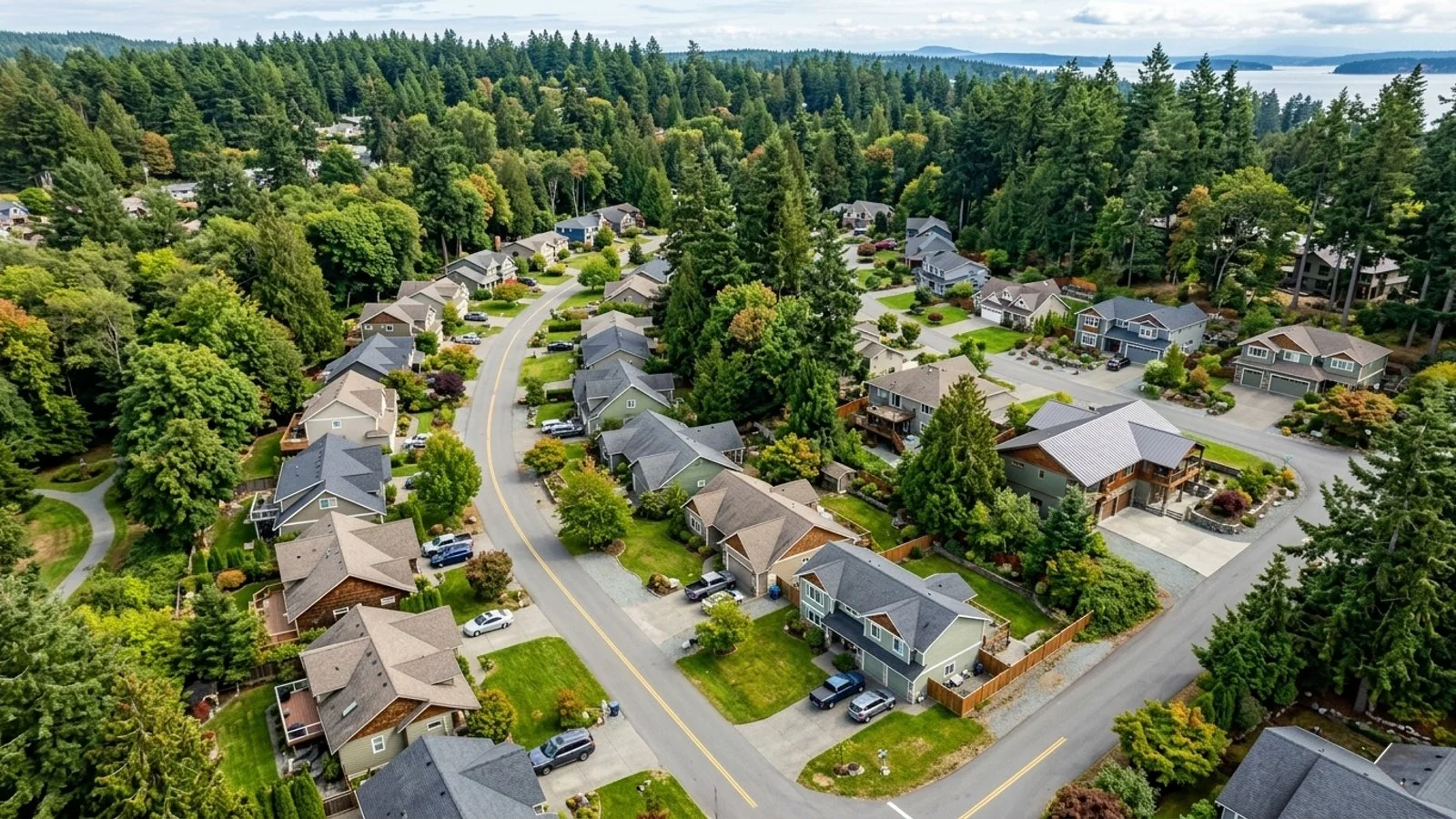
The median sale price in Whidbey Island, WA is roughly $634,860, and homes are spending an average of 18 days on the market right now. At that price point, financing isn't a background detail - it's the whole game for most buyers, especially first-time home buyers in Whidbey Island, WA. About 37% of recent sales closed above list price, which tells you there's still real competition out here for available inventory.
Rates shift constantly, and they pull both sides of the transaction with them. They determine how much house a buyer can afford and how many buyers are out touring listings on any given weekend. Whether you're buying or getting ready to sell, understanding how this works gives you a real edge.
Finding Current Mortgage Rates in Whidbey Island, WA
Those eye-catching numbers on national financial websites? They're almost never what you'll pay. Real rates depend on your individual financial profile, the property type you're buying, and what the market did that morning. What a national portal displays is usually a best-case scenario built around a massive down payment and spotless credit.
Rates move every single day - driven by bond markets, inflation data, and broader economic indicators. A rate posted Tuesday morning might be gone by Tuesday afternoon. Lenders reprice continuously to keep up.
The only number that matters is the one tied to your specific situation on the day you're ready to move. That means a same-day quote from a lender, or better yet, an official Loan Estimate.
Why Rates Fluctuate Daily
Lenders adjust their pricing in response to what the broader economy is doing. When inflation rises, rates typically follow - lenders need to compensate for the eroding purchasing power of the dollar. When the economy shows signs of cooling, rates often soften. This happens every business day, in the background, whether you're paying attention or not.
That's why buyers should stay in close contact with their loan officer while they're actively shopping. A lot can change between the time you start looking and the time you make an offer.
Securing an Accurate Lender Quote
An official Loan Estimate lays out your quoted rate, estimated monthly payment, and total closing costs in a standardized format. Lenders are required by law to provide it within three days of receiving your application, and the format is uniform enough that you can compare two of them side by side without needing a finance degree.
Look at the Annual Percentage Rate (APR) on each one - that's the number that reflects the true cost of the loan, fees included. It's the only honest apples-to-apples comparison you've got.
How Interest Rates Affect Your Buying Power on Whidbey Island
The typical home value for the Whidbey Island and Oak Harbor area sits around $596,707. Active listings range from roughly $345,000 for smaller properties up to several million dollars for waterfront estates. Your interest rate is what determines where in that range you can realistically shop.
A fraction of a percent doesn't sound like much until you run it out over 30 years. That small shift in rate translates to tens of thousands of dollars in added interest over the life of the loan - and that added cost directly reduces how much principal you can borrow. When rates climb, buyers with a fixed monthly budget have to look at lower-priced homes to keep their payments workable.
Comparing Monthly Payments
To put a number on it: on a $500,000 loan balance at 6%, the principal and interest payment runs roughly $2,997 per month. That figure doesn't include property taxes or insurance, which will add to your total obligation.
Bump that rate to 7% and the same loan costs about $3,326 per month. That's a $329 monthly difference - and it's why buyers watch rate movement so closely while they're shopping.
The Price Versus Rate Trade-Off
Waiting for rates to drop is a real choice, but it's not a free one. If prices continue to appreciate while you're waiting, the lower rate you were hoping for gets offset by a higher purchase price. You may end up in roughly the same place - or worse.
The more reliable approach is finding a monthly payment you can comfortably handle today and buying when you're ready, rather than trying to call the bottom on financial markets.
How Loan Types Shape Your Mortgage Rate
The mortgage product you choose sets the baseline rate the lender offers. Different loan structures carry different levels of risk for the lender, and they price accordingly. Knowing your options lets you pick the structure that fits your budget and timeline - not just the one your parents used.
Loan term matters here. Shorter commitments generally come with lower rates because the lender's money isn't exposed to inflation risk for as long. Government-backed programs add another layer of options, with pricing structures that differ from standard conventional mortgages - and eligibility tied to service history or income criteria.
30-Year vs. 15-Year Fixed Mortgages
A 30-year fixed is the most common choice for a reason - it keeps the monthly payment lower by spreading it across three decades, which gives you more breathing room in your budget. The trade-off is a slightly higher rate than you'd get on a shorter term.
A 15-year fixed comes with a lower rate and gets you to payoff in half the time, but the monthly payment is considerably higher. Make sure your budget can genuinely support that number before you commit.
Fixed-Rate vs. Adjustable-Rate Mortgages (ARMs)
A fixed-rate loan locks your interest rate for the entire life of the mortgage. Your payment stays the same whether the economy is humming or rattling - that predictability has real value.
Adjustable-rate mortgages, or ARMs, typically open with a lower introductory rate for the first five to ten years. After that window closes, the rate adjusts annually based on current market conditions. Your payment could go up or down. If you're confident you won't be in the home past the fixed period, that initial savings can make sense. If you're not sure, it's a gamble.
Conventional, FHA, VA, and USDA Loans
Conventional loans aren't government-backed and typically require stronger credit to land the best rates. FHA loans - insured by the Federal Housing Administration - often offer competitive rates for buyers with lower credit scores, though they come with both upfront and annual mortgage insurance. VA loans are available to eligible veterans and active-duty service members, frequently offering some of the lowest rates available with no down payment required. USDA loans offer similar benefits for buyers purchasing in designated rural areas who meet specific income limits.
Securing a Lower Mortgage Rate as a Buyer
Lenders save their best rates for borrowers who look like the lowest risk. The good news is that a few deliberate steps before you apply can move you meaningfully in that direction - and the savings compound over the life of the loan.
Your credit history is the first thing a lender looks at when setting your rate. Borrowers with excellent scores consistently get lower offers than those with fair or poor credit. Your down payment matters too - a larger one reduces the loan-to-value ratio, which lowers the lender's exposure and often results in a better rate.
Improving Your Credit Profile
Before you apply for pre-approval, pull your credit report and look for errors. Paying down revolving debt and lowering your credit utilization ratio is one of the fastest ways to move your score in the right direction.
Don't open new credit cards or take out an auto loan while you're house shopping. New inquiries can temporarily drop your score, and even a small dip can affect the rate a lender is willing to offer.
Rate Locks and Discount Points
A rate lock is an agreement with your lender that holds a specific rate for a set period - usually 30 to 60 days. It protects you from market increases while your Whidbey Island purchase moves through underwriting.
You can also pay discount points at closing to buy your rate down permanently. Each point typically costs 1% of the total loan amount and reduces the rate by a fraction of a percent. If you're planning to stay in the home long-term, that math often works in your favor.
Choosing a Local Mortgage Lender in Island County
A lender who knows Whidbey Island is genuinely more useful than a distant call center. Local professionals understand the area's specific property types, zoning quirks, and appraisal timelines. They have established relationships with local appraisers, which helps keep your transaction moving on schedule instead of stalling while someone figures out the island's peculiarities from 2,000 miles away.
A pre-approval letter from a recognized local lender also carries weight with listing agents and sellers. It signals your financing is in competent, accessible hands - not sitting in a queue somewhere.
Your options include traditional banks, credit unions, direct lenders, and mortgage brokers. Each works differently and offers access to different loan products, so it's worth understanding what you're choosing between.
Types of Mortgage Professionals
Retail banks and credit unions lend their own money and offer their institution's specific products. If you already have a solid relationship with a local bank, there may be relationship discounts worth asking about.
Mortgage brokers don't lend their own money - they shop your application across multiple wholesale lenders to find the best available terms. Direct lenders handle everything from processing to funding in-house, which can sometimes compress the closing timeline.
Questions to Ask Before Committing
Ask about average closing timeframes and how they handle communication outside standard business hours. Real estate on Whidbey doesn't pause for weekends - you may need an updated pre-approval letter on a Saturday afternoon to get an offer in.
Get a breakdown of their specific lender fees, including origination and processing charges. The rate is only part of the cost. Comparing fees alongside the quoted rate gives you the complete picture.
What Interest Rates Mean for Whidbey Island Sellers
Rates affect sellers just as much as buyers - they control how many qualified buyers can afford your home in the first place. When rates climb, that pool shrinks, showings slow, and competing offers become less common.
Right now, homes on Whidbey Island are selling in roughly 18 days, with about 37% closing above list price. That's meaningful demand. But buyers are acutely aware of their monthly payment limits, and a rate move in the wrong direction can knock a segment of your potential buyers out of reach almost overnight.
Overpricing in a higher-rate environment tends to end the same way every time: longer days on the market and a price reduction that puts you in a worse negotiating position than if you'd priced it right from the start.
Pricing Your Listing Correctly
Buyers are working backward from a maximum monthly number, not a maximum purchase price. If your home sits just above a psychological price threshold, a small rate increase can price it out of reach for a large chunk of active shoppers - people who would have been interested at the right number.
Working through recent comparable sales with your agent is the most grounded way to find the price that generates real interest. A well-priced home creates competition on its own, regardless of what the broader market is doing.
Mortgage Rate FAQs
What are mortgage rates today in Whidbey Island, WA?
Mortgage rates change daily based on economic indicators and bond markets. To get an accurate current rate for a property in Island County, you'll need to request a personalized quote or Loan Estimate directly from a lender. Published national averages rarely match the specific rate an individual buyer will secure.
How much does a 1% difference in mortgage rate cost me when buying a home on Whidbey Island?
It adds up faster than most people expect. On a $500,000 loan, moving from 6% to 7% adds about $329 to the monthly principal and interest payment. Over a 30-year term, that single percentage point translates to over $118,000 in additional interest.
How do I get the best mortgage rate as a buyer in Whidbey Island?
Improve your credit score, pay down existing debt, and save for a larger down payment before you apply. Apply with multiple lenders - including banks, credit unions, and brokers - and compare Loan Estimates side by side.
Should I wait for rates to drop before buying a home in Whidbey Island?
That depends on your timeline and financial readiness. Timing the market is genuinely difficult, and if rates do drop, buyer competition tends to increase quickly - which can push prices up and offset the rate savings. If you can comfortably afford the payment at current rates, waiting may not work in your favor.
How do I choose a mortgage lender in Whidbey Island, WA?
Look for someone who's accessible on weekends and familiar with Island County's specific property types and appraisal timelines. Ask about origination fees, average closing times, and whether they're a direct lender, a bank, or a mortgage broker.
How do current interest rates affect my strategy if I am selling a house on Whidbey Island?
Higher rates reduce buyer purchasing power, which shrinks your pool of potential buyers. Pricing your home competitively based on recent comparable sales is the most effective way to make sure it fits within the budgets of buyers who are actively shopping right now.
When during the Whidbey Island homebuying process should I lock in my mortgage rate?
You can typically lock your rate once the seller accepts your offer. A standard rate lock lasts 30 to 60 days, which protects you from market increases while your loan moves through underwriting.
Planning Your Purchase or Sale on Whidbey Island
Financing is one piece of a transaction that has a lot of moving parts. Having a clear plan in place before you need it means you're ready to act when the right property comes up - or when you decide it's time to list.
Talking to a local real estate agent early gives you an honest read on current market dynamics and what to expect during negotiations. That conversation is more useful before you're under pressure than during it.
A good agent can also connect you with vetted local lenders who have a track record of closing on time in Island County. Experienced representation paired with solid local financing is what a smooth closing looks like in practice.