What to Expect When Moving to Coupeville, WA From Seattle
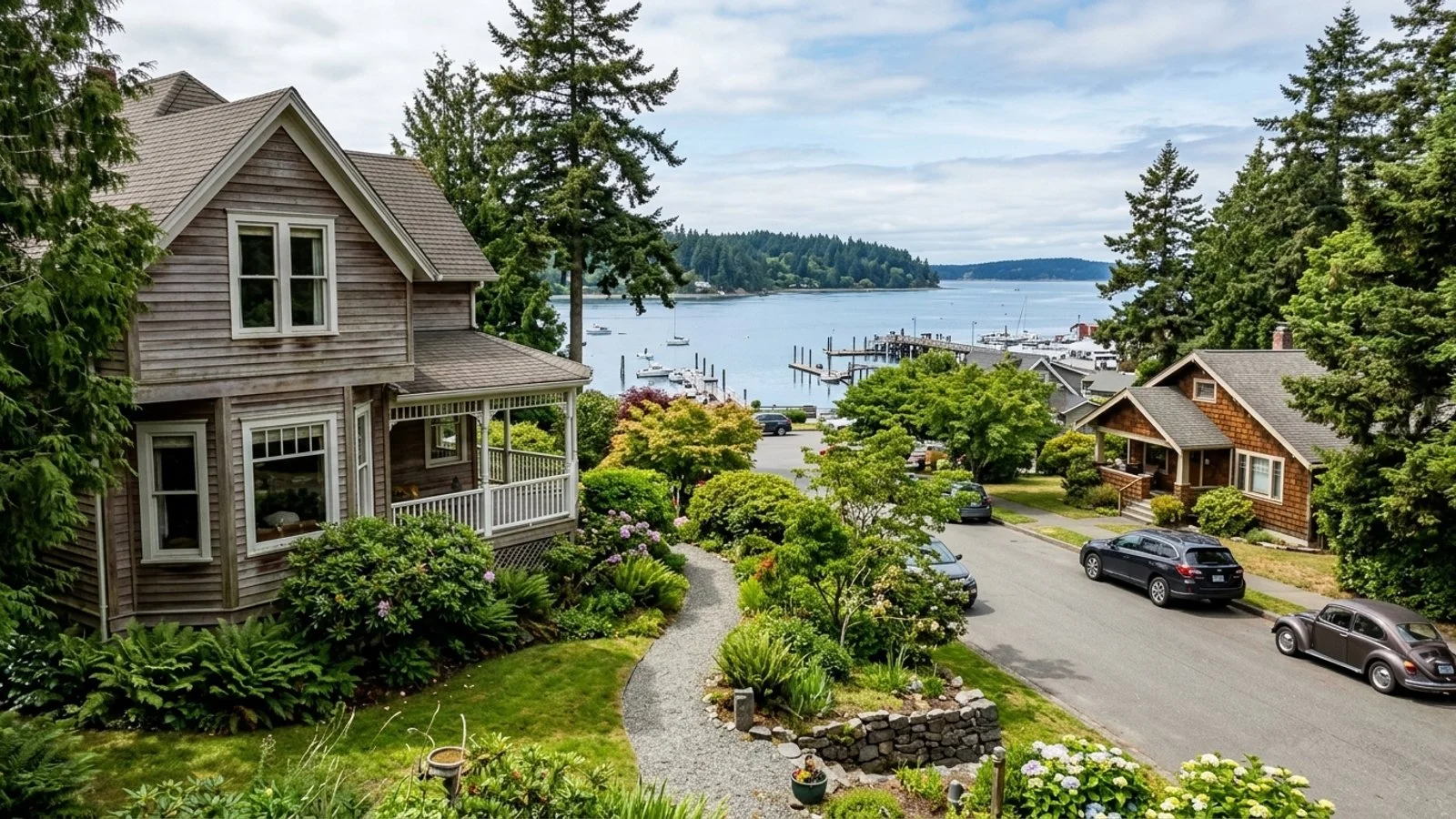
Buyers weighing Washington State real estate eventually run into the same fork in the road: Seattle or Whidbey Island. Coupeville sits on that island - historically grounded, waterfront-facing, and operating on an entirely different scale than the city most of these buyers are trying to leave. Neither is better. They're just genuinely different in ways that matter when you're deciding where to put your money and whether living in Coupeville is the right move.
The decision usually comes down to three things: what you're paying for housing, how long you're willing to spend getting somewhere, and what you actually want your days to look like. Both places are part of the broader Puget Sound region, but their real estate markets in 2026 don't really compete with each other. Understanding the gap in property values, local tax structures, and daily logistics is how you figure out which side of the water makes sense for you.
Why Buyers Compare Coupeville and Seattle
Seattle is a major metropolitan environment with a tech-heavy economy and dense neighborhoods. Buyers shopping there expect high-rise condos, modern townhomes, and established single-family neighborhoods throughout King County. The trade-off for that urban access is a high entry price and a market that doesn't wait around.
Coupeville is in Island County and serves as a historic waterfront alternative for buyers who want more space - or just a different scale of community - without leaving Western Washington. Moving to Whidbey Island means trading city infrastructure for maritime surroundings and a localized economy. That's not a downside for everyone. For a certain kind of buyer, it's exactly the point.
How Housing Markets Compare
These two markets are about as different as two markets in the same state can be. Seattle moves a large volume of inventory across thousands of active listings. Coupeville, by contrast, runs at roughly 7 available homes at any given time - about 3.5 months of supply as of 2026. You're not browsing a deep pool here.
Pricing tiers and negotiation timelines follow a different logic on each side of the water. Seattle moves quickly. Coupeville gives you a bit more room to think.
Average Home Prices and Inventory
Buying in Coupeville is generally less expensive than buying in Seattle. The median sale price in Coupeville sits around $470,800 as of mid-2026. Seattle's median runs between $865,000 and $890,000.
That gap matters. Your budget goes further in Island County. What you give up is selection - Coupeville's limited inventory means far fewer total options than the thousands of listings typically active in King County at any given time.
Typical Property Types
Seattle's housing stock reflects its zoning: urban condos, dense townhome developments, and traditional single-family houses packed closer together near commercial centers and transit corridors.
Coupeville is a different mix entirely. Historic homes, waterfront properties along the Puget Sound, single-family houses on larger lots. Attached urban housing isn't really what this market offers.
Market Pace and Competition
Seattle homes average around 11 to 14 days on market. Buyers in King County need to be ready for quick offer reviews and competing bids - there's not much time to deliberate.
Coupeville moves at a slower pace, with homes spending roughly 17 days on market before going under contract. Sellers there receive about 97.5% of list price on average, and roughly half of homes sell above asking. So it's not a soft market - you just get a little more runway before you have to decide.
Cost of Living and Tax Differences
Washington State has no state income tax, which works in your favor regardless of which side of the water you land on. That said, local property taxes and general living costs differ between Island County and King County, and those differences show up in your monthly numbers.
A lower purchase price in Coupeville comes with a different property tax structure, not necessarily a lower one on a percentage basis - though the dollar amounts often do come out favorably compared to Seattle.
Property Taxes in Island County vs King County
Island County's effective property tax rate runs roughly 0.67% to 0.89%, which falls below the Washington state median. The median annual property tax bill for an Island County homeowner is around $3,999.
King County's rate is approximately 0.88% of median home value, working out to an average bill of about $3,572 per year. But King County's higher property values push the actual dollar amounts paid by Seattle homeowners to the highest level of any county in the state. The rate isn't dramatically different - the values underneath it are.
Local Economy and Commute Options
Seattle's economy runs on technology, retail, and aerospace, with a high concentration of corporate headquarters and a workforce to match.
Coupeville's economy is local by design. It's the seat of Island County, so government and public services make up a significant part of the employment base there.
Major Industries in Coupeville
The town's identity connects directly to its maritime heritage and the tourism that comes with it. The island's only major public hospital is also here, which anchors a layer of healthcare employment.
Naval Air Station Whidbey Island sits just outside town and functions as a major regional employer. Military personnel and civilian contractors are a consistent part of the Coupeville residential base.
Commuting and Transportation
Seattle commuters work around interstates, light rail, and municipal buses. Traffic congestion is a routine part of life in King County - no real surprise there.
Getting on and off Whidbey Island means either using the ferry system or driving north to cross the Deception Pass bridge. If you're thinking about living in Coupeville while working in Seattle, test the ferry schedules yourself before you commit. The water crossing adds real, fixed time to a daily commute, and that time accumulates.
Weather and Outdoor Recreation
Both locations share the Pacific Northwest's basic climate template: dry summers, wet winters. But their specific positions within the Puget Sound create some local variation in day-to-day weather patterns, and Coupeville's location partially within the Olympic rain shadow is worth understanding before you pack.
Outdoor access is a real draw for both areas - just different kinds of outdoor access.
Access to Parks and Recreation
Coupeville puts you minutes from Ebey's Landing and Fort Casey. Hiking trails, beachcombing, historical sites - that's what's right outside the door. It's not manicured; it's rugged, and it's not crowded.
Seattle has Discovery Park, Green Lake, and solid park infrastructure throughout the city. But "access to nature" in Seattle means driving to it. In Coupeville, it's already there.
Frequently Asked Questions
How do home prices and property taxes in Coupeville, WA compare to the Seattle real estate market?
Coupeville's median sale price is around $470,800, compared to Seattle's range of $865,000 to $890,000 - so the entry point is meaningfully lower. On the tax side, Island County's effective rate of 0.67% to 0.89% frequently produces a lower total annual bill than King County's rate applied to Seattle's significantly higher home values.
Is it realistic to commute daily from Coupeville to Seattle, and how does the ferry system factor into travel time?
It's possible, but it's not casual. The Whidbey Island ferry system adds fixed transit time and potential wait periods, and a daily round trip to Seattle is a real time commitment for standard office hours. Don't assume you'll adjust to it easily - go test the schedule first.
Does Coupeville get as much rain as Seattle, or is it protected by the Olympic rain shadow?
Coupeville sits partially within the Olympic rain shadow, which affects local weather patterns. Both areas share a Pacific Northwest climate, but the Olympic Mountains provide some geographic protection to Whidbey Island that Seattle doesn't get.
How does the day-to-day lifestyle and access to amenities in Coupeville differ from living in a Seattle neighborhood?
Coupeville's day-to-day is slower and maritime-focused - historic sites, tourism, local parks like Ebey's Landing. Seattle delivers a dense urban environment with immediate access to major retail, corporate hubs, and high-density transit. They don't really overlap.
What happens if I need specialized healthcare or emergency services after moving to Coupeville from Seattle?
Coupeville has Whidbey Island's only major public hospital, which handles standard emergency services and local medical care. If you need complex specialized treatment, you'll likely be traveling to larger mainland medical centers.