Understanding Water Utilities in Coupeville, WA: Town Water vs. Private Wells
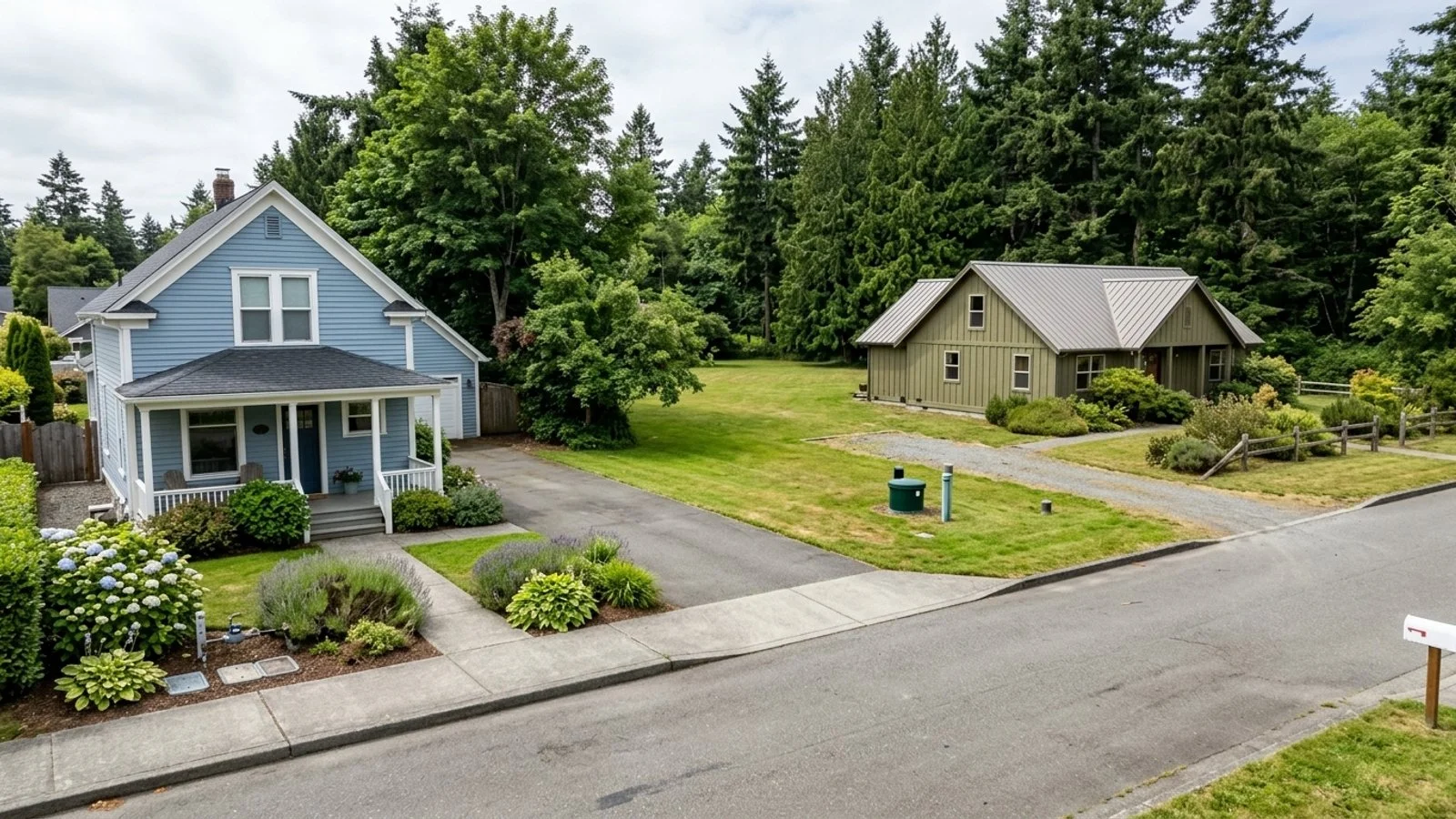
The median price for homes for sale in Coupeville, WA sits around $470,800, and inventory moves - homes average roughly 17 days on the market. If you're looking at properties on Whidbey Island, you'll notice pretty quickly that utility setups vary depending on whether a house sits inside town limits or out in the county.
Water is one of the biggest variables. Your property might connect to the Town of Coupeville's municipal system, rely on a private well, or draw from a shared community well. Knowing how these systems work, what they cost, and what they require to maintain is the difference between an accurate budget and an unpleasant surprise after closing.
Comparing Town Water and Well Water in Coupeville
Most homes near the historic waterfront and central town limits connect directly to the municipal water grid. Properties further out in Island County typically rely on private wells pulling groundwater from local aquifers.
With a municipal system, the local government pumps, treats, and tests the water before it ever reaches your faucet. With a private well, you own the infrastructure - the pump, the pressure tank, the filtration - and you're entirely responsible for maintaining it and monitoring water quality.
How to Tell Which System You Have
The easiest way to confirm a property's water source is to check the seller's disclosure or scan the yard for a well cap - a metal or plastic pipe sticking a few inches to a few feet out of the ground.
If you're receiving a water bill from the Town of Coupeville, you're on municipal water. You might also hear the phrase "city water well," which just means the municipality draws its public supply from large, town-owned groundwater wells rather than a surface reservoir.
The Cost to Run Water at Your Whidbey Island Home
The Town of Coupeville bills on a tiered rate structure based on cubic feet used. There's a base utility charge of $96.72 - which varies slightly by meter size - before any usage costs are applied.
The first 500 cubic feet run $0.0772 per cubic foot, roughly $10.32 per 1,000 gallons. Usage between 501 and 2,000 cubic feet jumps to $0.1158 per cubic foot, or about $15.48 per 1,000 gallons. Anything over 2,000 cubic feet hits the top tier at $0.1545 per cubic foot - around $20.66 per 1,000 gallons. If you're a heavy water user, that tiered structure adds up fast.
Well Maintenance and Septic Expenses
No monthly usage bill is one of the genuine advantages of a private well. Your costs instead come from the electricity to run the pump and routine upkeep on the pressure tank and any filtration systems.
Well water and septic are billed separately - because they are separate systems entirely. Water comes up from the ground on your property; wastewater goes into your private septic tank. The recurring costs to plan for are septic pumping every few years and replacing well filters as needed. Neither is expensive in any given month, but neither is free either.
Water Quality and Health Standards
The Town of Coupeville publishes annual Consumer Confidence Reports with detailed water quality testing results. According to EPA monitoring data, the town's water system met federal health-based drinking water standards during the most recent assessed quarter in 2024. Residents who want to dig into specific contaminant levels - lead, copper, whatever you're concerned about - can pull the individual annual reports from the town's utility webpage.
Treating and Filtering Private Well Water
Private well water isn't inherently unsafe. It is, however, entirely the homeowner's responsibility to monitor. Groundwater on Whidbey Island can carry elevated levels of iron, manganese, or hardness that affect taste and feel.
A lot of county residents install water softeners or reverse osmosis systems to handle the mineral load. Done right, treated well water is effectively indistinguishable from municipal water coming out of the tap.
The Pros and Cons of a Private Well
A well gives you independence from municipal rate hikes and tiered billing. If you're running a large garden or keeping livestock, you can use what the well yields without watching a usage meter tick up.
The flip side is liability. A failed pump or collapsed casing is an immediate out-of-pocket expense with no utility department to call. Power outages cut your water flow entirely unless you've got a backup generator. That's worth knowing before you fall in love with a rural parcel.
Switching Between Well and Town Water
Connecting a rural property to the municipal grid is only possible if the town's water mains already run past your parcel - or if you're willing to pay to extend them. Properties well outside Coupeville town limits generally don't have that option.
Where a main is accessible, you'll pay the town's connection fees, cover meter installation, and hire a contractor to trench the pipe to your house. A few properties near the boundary manage to keep their well for agricultural irrigation while using town water indoors - but the two systems have to stay entirely separate to prevent cross-contamination. That's not optional.
Buying a Coupeville Home with a Well
Island County Public Health doesn't require private well water-quality testing at the time of a real estate transfer. That puts the responsibility on you as the buyer. Write an inspection contingency into your offer that specifically includes a comprehensive well flow and water quality test.
Septic is a different story. Washington state law requires an Island County Licensed Maintenance Service Provider to inspect conventional septic systems within three years prior to a transfer, or within one year for alternative systems. That inspection has to happen - it's not negotiable.
Questions to Ask the Seller
Ask for the well driller's log. It shows the well's depth, the static water level, and the original flow rate - the baseline you need to evaluate the system. Request maintenance records for the pump and any filtration equipment as well.
Then ask whether the well has ever run dry during late summer. That's the question sellers sometimes forget to volunteer. The answer tells you a lot about what you're buying into.
Frequently Asked Questions
Who are the primary utility providers for electricity, water, and trash collection in Coupeville, WA?
The Town of Coupeville handles municipal water utility services for properties within town limits. Homes outside the town boundaries rely on private wells for water and private septic systems for wastewater. For electricity and trash collection, check with the sellers to find out which private companies currently service the property.
How do I transfer town water and sewer services into my name after buying a home within Coupeville city limits?
Contact the Town of Coupeville utility department to set up your account. They manage billing for the base charge of $96.72 and the tiered usage rates for water consumption.
What should I know about septic system inspections and well water testing when buying a rural Coupeville property?
Island County Public Health requires a licensed provider to inspect conventional septic systems within three years of a property transfer, or within one year for alternative systems. The county does not mandate private well testing at the time of sale, so you'll need to arrange your own water quality checks.
Are there any upfront deposits or connection fees required to set up new residential utilities in Island County?
Connecting to the municipal water system means paying the Town of Coupeville's connection fees and meter installation costs. If you're buying a home with an existing private well, there are no municipal connection fees - but all maintenance is on you from day one.
Which internet providers offer the most reliable high-speed service for remote or waterfront homes in Coupeville?
Availability varies widely between waterfront parcels and rural county areas. Verify service options directly with regional providers using the property's exact address - town infrastructure doesn't reach all rural locations.
As a seller, when do I need to schedule my final utility readings and Island County septic compliance check before closing?
Schedule your septic inspection well before closing. Island County requires conventional systems to have been inspected within the past three years and alternative systems within the past year. Final water meter readings are coordinated through the Town of Coupeville's utility department prior to the transfer of ownership.