Financial Assistance and Homebuyer Programs in Whidbey Island WA
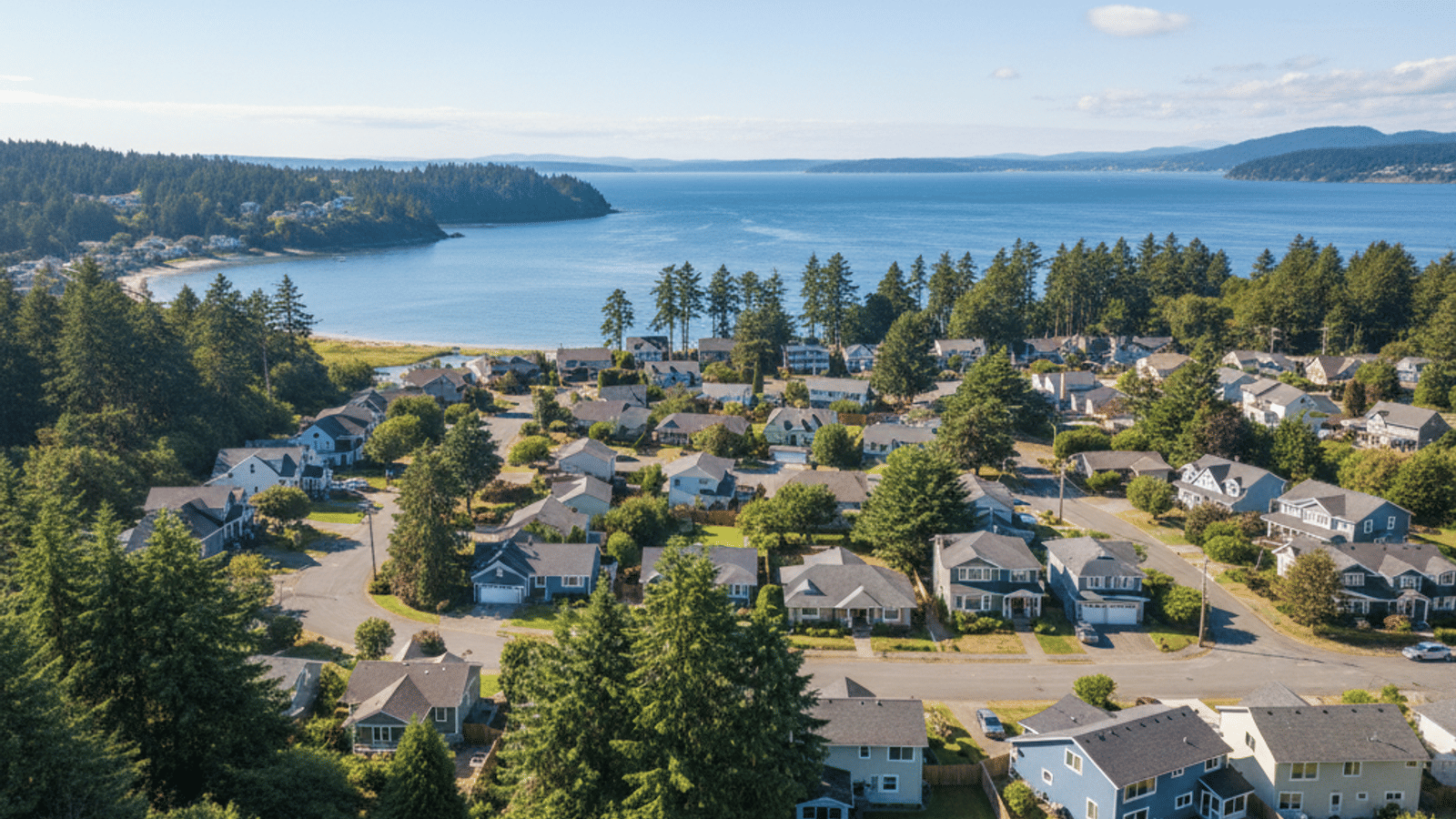
If you have been looking at real estate apps and crunching the numbers for a move to Whidbey Island, you might feel like you need a mountain of cash just to get your foot in the door. It is a common misconception that you need a full 20% down payment to buy a home here. For many buyers—especially renters in Oak Harbor or those looking for their first place in Coupeville—that just isn't the reality.
The truth is that Washington State and Island County offer robust programs that can get you into a home with 0% to 3.5% down. This is particularly relevant here because our market is unique. We have a distinct split between North Whidbey, where the strong military presence at NAS Whidbey keeps median prices around $530,000 to $550,000, and South Whidbey (Langley and Freeland), where luxury and vacation markets push median prices closer to $800,000 and up.
Depending on where you want to buy, different programs will do the heavy lifting for you. Let’s walk through the state, federal, and hyper-local options available right now to help you bridge the affordability gap.
Washington State Housing Finance Commission (WSHFC) Programs
When we talk about "down payment assistance" (DPA) in Washington, we are usually talking about the Washington State Housing Finance Commission. It is important to know that the WSHFC is not a direct lender. You don’t go to their office to get a loan; instead, they partner with local loan officers who are trained to layer these specific programs on top of your standard mortgage.
Home Advantage Program
This is the workhorse of the state’s assistance options and the one most buyers use. The biggest surprise for most people is that you do not have to be a first-time homebuyer to use it. As long as you have not owned a home in the last three years (or if you are buying in a "targeted area"), you might qualify.
The income limits are generous, currently capped around $180,000 per year for most households. This makes the program accessible even for dual-income households looking at neighborhoods in Oak Harbor. The program typically allows for up to 4% of the loan amount to be used for your down payment.
House Key Opportunity
If you are strictly a first-time buyer (meaning you haven’t owned a home in the past three years) and your income is a bit lower, the House Key Opportunity program might be the better fit. The income limits are stricter and vary based on your household size and location within Island County, but the trade-off is often a lower interest rate compared to the Home Advantage program. This can make a significant difference in your monthly payment.
Covenant Homeownership Program
This is a newer, groundbreaking initiative designed to address historical housing discrimination. If you or your parents/grandparents lived in Washington State before 1968 and were affected by redlining or discriminatory housing practices, you may be eligible for significant assistance. This program offers down payment loans with 0% interest, specifically helping those who were historically locked out of the home buying process in Washington.
Down Payment Assistance (DPA) Explained
It is vital to understand that most of these "assistance" programs are loans, not gifts—but they are structured to be very budget-friendly.
Most WSHFC down payment assistance comes in the form of a second mortgage. Before you panic about having two bills, know that these second mortgages usually have 0% to 1% interest and, crucially, deferred payments. You generally do not pay a dime on this second loan month-to-month. Instead, the balance is paid off when you eventually sell the home, refinance, or pay off your main 30-year mortgage.
There are also specialized funds like the Opportunity DPA, which offers up to $15,000 for low-income buyers (usually paired with the House Key program), and Veterans DPA, which provides funds specifically for closing costs. This is a great tool for veterans using a VA loan who might have the down payment covered but need help with the fees.
Federal and Military Programs for Whidbey Residents
Because of the Naval Air Station, Whidbey Island has a unique financial ecosystem. Federal loans are not just "available" here; they are the standard for a huge chunk of our market.
VA Loans
If you are active duty or a veteran stationed at NAS Whidbey, the VA loan is likely your best financial tool. It offers 0% down and requires no private mortgage insurance (PMI). Because the Oak Harbor market is so military-heavy, sellers here are very accustomed to seeing VA offers. Unlike in some other markets where sellers might be hesitant, listing agents in North Whidbey generally understand the VA process well.
USDA Rural Development Loans
Here is a secret about living on Whidbey: almost the entire island is considered "rural" by the USDA, with the exception of the denser parts of Oak Harbor. If you are looking at homes in Coupeville, Freeland, or Langley, a USDA loan is a powerful option.
USDA loans offer 0% down payment for low-to-moderate-income buyers. The catch is that the property must be in an eligible area and your household income must fit within their limits. It is worth checking the eligibility map for specific properties, as boundaries can change.
Island County Specific Resources
Beyond the big state and federal programs, we have local organizations working to keep housing affordable right here in our community.
Habitat for Humanity of Island County operates differently than a bank. They use a "sweat equity" model where you help build the home. They focus on permanent affordability, often using a Land Trust model. This means you own the house, but the land is held in trust to keep the price down for you and the next buyer. These homes are typically built in Oak Harbor and Freeland. To qualify, applicants usually need to earn below 80% of the Area Median Income.
The Housing Authority of Island County (HAIC) is primarily known for rental assistance, but they have a program called "Family Self-Sufficiency" (FSS). If you are currently receiving housing assistance, this program helps you set up an escrow account. As your income increases, the difference in rent is saved for you, which can eventually be used as a down payment on a home.
Eligibility Criteria: Do You Qualify?
Getting access to these funds requires checking a few boxes. While every program has its own fine print, here are the general benchmarks you should be ready for.
Income Limits: This is the big one. For the WSHFC Home Advantage program, the limit is generous—around $180,000 per year. However, for House Key, USDA, or Habitat for Humanity, the limits are lower and depend on how many people live in your house.
Credit Score: You generally need a credit score of at least 620 to qualify for most state-sponsored programs. If you are on the borderline, a lender can sometimes help you identify quick ways to bump that score up.
Homebuyer Education: You cannot skip class. The WSHFC mandates a 5-hour homebuyer education seminar. You can take this virtually or in person. It is critical that you complete this before you close on a home.
Steps to Apply for Assistance on Whidbey
Navigating these programs is not something you do alone. Here is the typical workflow for a buyer using assistance.
Find a WSHFC-Trained Loan Officer: This is your most important step. Not every bank knows how to process these state bonds. You need to find a lender specifically trained in these programs to ensure they structure the loan correctly.
Register for the Class: Sign up for the required Homebuyer Education class early. Do not wait until you have found a house, or you might delay your closing.
Get Pre-Approved: Ask your lender to run the numbers including the down payment assistance. This gives you a clear budget and a pre-approval letter that sellers will respect.
House Hunt: Once you know your numbers, you can start looking at neighborhoods in Oak Harbor or further south, keeping your specific loan limits in mind.
Bridging the Gap: Affordability in North vs. South Whidbey
When you are ready to apply these programs to the actual market, geography matters.
In North Whidbey (Oak Harbor), median home prices hover around $550,000. This price point fits comfortably within FHA and USDA loan limits, and the inventory here is generally higher. The assistance programs go a lot further here, helping you buy a standard single-family home.
In South Whidbey (Langley, Freeland, Clinton), prices jump significantly, often starting at $800,000 for decent single-family inventory. This makes it harder to use first-time buyer programs because the home prices may exceed program caps. However, USDA loans are still very viable here if you can find a property that fits your budget.
If single-family homes in the south are out of reach, don't forget to look at condos and townhomes. They are often a great entry point that allows you to utilize these financial tools to stop renting and start building equity.
Frequently Asked Questions
Can I combine multiple assistance programs?
Yes, in many cases you can "stack" assistance. For example, a buyer might use the WSHFC down payment assistance loan and also receive a Homes for Heroes rebate at closing. However, it depends entirely on the lender and the specific loan product, so you need to disclose everything to your loan officer upfront.
Do I have to be a first-time buyer for WSHFC programs?
No. This is a very common misconception. The popular "Home Advantage" program is open to repeat buyers, provided you meet the income and credit requirements. The "House Key" program, however, is restricted to strict first-time buyers.
Is there a specific military down payment grant for NAS Whidbey?
Military buyers often confuse the VA loan benefit with a cash grant. The VA loan allows for 0% down, which is a benefit, not a grant. However, the WSHFC does offer a specific "Veterans DPA" loan that can help cover closing costs, which you can use in conjunction with your VA loan.
What are the income limits for down payment assistance in Island County?
The limits vary by program and household size. Generally speaking, the WSHFC Home Advantage program caps out around $180,000 per year, making it the most accessible. Programs like House Key and USDA have lower limits that are adjusted annually based on the Area Median Income.